E-mail:
tina@yuzechemical.com
Contact: Tina Pan
Email: tina@yuzechemical.com
Wechat: +8618660611992
Whatsapp: +8618660611992
Address: Xinxing Village, Dajiawa Street, Binhai Economic Development Zone,Weifang City ,Shandong Province,China.
Website: www.wfyuzehg.com
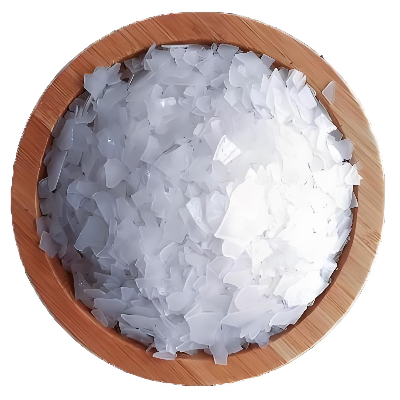
Many new users cannot distinguish between white flakes and halogen flakes, both of which are flake forms of hexahydrate magnesium chloride, and often refer to them collectively as “halogen flakes”.
1.1 Hexahydrate Magnesium Chloride – Halogen Flakes
The term “halogen flakes” is a relatively traditional name. Their appearance is shown in the figure below.They are called halogen flakes because they were originally produced from brine mother liquor obtained by solar evaporation. They are mostly flaky, relatively large and thick.
Due to stricter environmental protection policies and higher quality requirements from customers, few manufacturers still produce this traditional halogen flakes. Most old-fashioned production methods (such as open-pot evaporation) have been phased out.At present, only large-scale manufacturers with mature technology and stable quality remain.
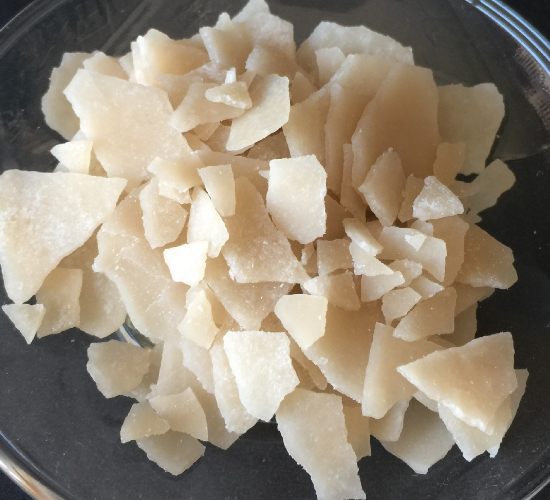
1. Raw materials are mainly extracted from seawater (from solar-evaporated brine), a renewable resource.
2. Produced by manufacturers with mature technology, quality meets national standards.
3. Stable in application, as it has long been the main raw material used by magnesium chloride producers.
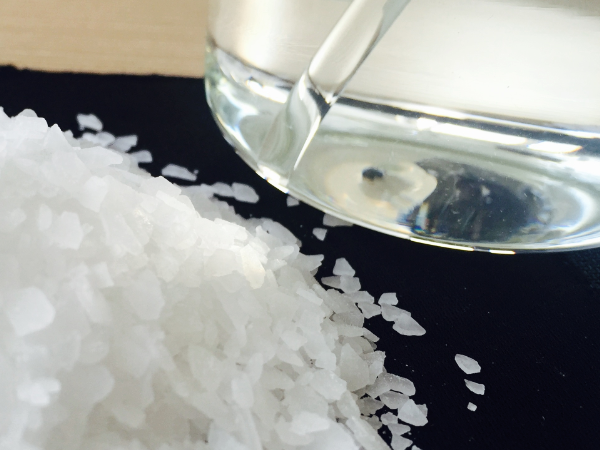
White flakes are milky white, translucent or transparent irregular flakes, smaller and thinner in size.They are produced through chemical synthesis, typically by direct reaction of magnesium hydroxide or magnesium oxide.
The main advantages of chemically synthesized white flakes:
1. High and stable content (high purity).
2. Low impurities (no floating flocs commonly found in halogen flakes).
3. Better suited for applications with strict quality requirements.
4. More cost-effective: under similar content and quality, white flakes are about 10–30 RMB/ton cheaper than halogen flakes.
Summary
Despite different production processes and raw materials, both products are hexahydrate magnesium chloride.
· For general applications, customers can choose either product based on quality and price.
· For applications with strict requirements (such as limits on sulfate, fluoride, sodium ions, etc.), our sales team will compare and analyze the test report data before recommendation.
Yuze Magnesium Chloride has 13 years of experience in:
· Hexahydrate magnesium chloride: halogen flakes, white flakes, granules, pellets
· Anhydrous magnesium chloride: powder, flakes, blocks
We understand the demands of both domestic and overseas customers and can provide you with the most suitable products.We will continue to update professional content about hexahydrate and anhydrous magnesium chloride.
Next: No Information