E-mail:
tina@yuzechemical.com
Contact: Tina Pan
Email: tina@yuzechemical.com
Wechat: +8618660611992
Whatsapp: +8618660611992
Address: Xinxing Village, Dajiawa Street, Binhai Economic Development Zone,Weifang City ,Shandong Province,China.
Website: www.wfyuzehg.com
As winter arrives, snowfall comes along. Today, our editor from Yuze magnesium chloride manufacturer will explain whether magnesium chloride can be used as a de-icing agent.
What is a de-icing agent?De-icing agents are chemical products used to lower the freezing point of snow and ice and keep water in liquid form. They mainly prevent ice formation caused by low temperatures, which can lead to traffic accidents and congestion on roads, airports, urban streets, and highways.
Classification of De-icing Agents
1. Organic de-icing agents (e.g., calcium magnesium acetate):
Non-corrosive but expensive; mostly used in airports and developed regions.
2. Inorganic de-icing agents (e.g., calcium chloride, magnesium chloride).
3. Mixed type:
Produced by mixing different components in fixed proportions.
We have already given you the answer above. Now we will explain magnesium chloride as a de-icing agent in detail:
1. Which type of magnesium chloride is suitable for de-icing?
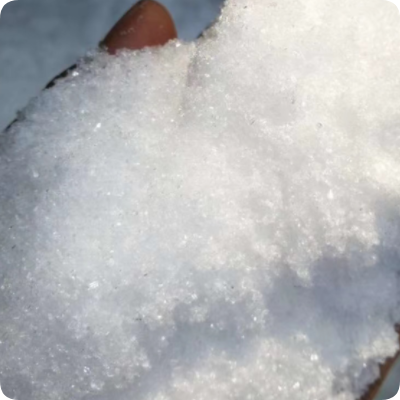
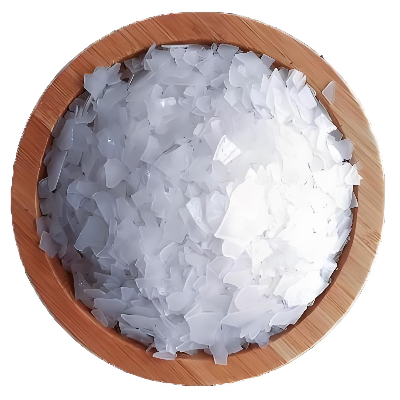
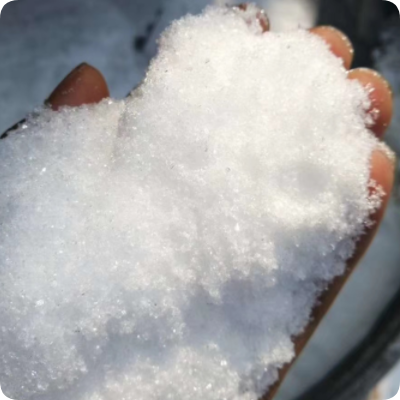
There are many types of magnesium chloride.For snow melting, we usually use 46% magnesium chloride hexahydrate.The freezing point of 46% magnesium chloride solution is about -15 to -20℃ (at density 1.172g/cm³).
Its snow-melting principle:It releases heat when dissolving, lowers the freezing point, and quickly melts ice and snow at low temperatures.
Reasons for using 46% magnesium chloride:
· Relatively low cost, suitable for large-scale use
· Lower corrosiveness than sodium chloride
· Less damage to concrete and metals under normal dosage
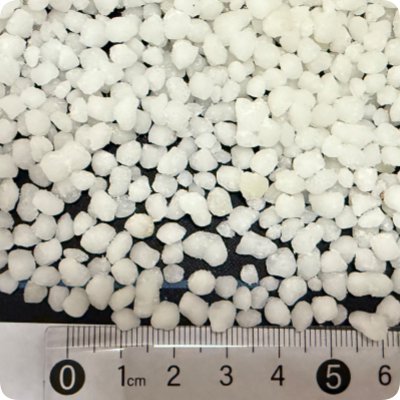
Another product is 46% magnesium chloride hexahydrate granules (balls).They are convenient to use and can be spread evenly on roads.
2. Disadvantages of magnesium chloride hexahydrate for de-icing
May cause soil salinization and hardening.
Long-term overuse harms plant growth.
In normal and low-frequency use, magnesium — one of its main components — is beneficial to vegetation and crops.
3. Low-temperature limitation:
Effective to about -15℃, so limited in extremely cold northern areas.
Situation 1: Airports, precision facilitiesUse calcium magnesium acetate (CMA).It is one of our main products at Yuze.We use US-standard production equipment and formula.Our CMA is non-corrosive, low-temperature resistant, and can remain unfrozen down to about -35℃.
Situation 2: Sudden heavy snowUse magnesium chloride hexahydrate or calcium chloride.But strictly control the dosage.
Situation 3: Normal daily demandWe recommend mixed de-icing agents:blended and granulated from magnesium chloride hexahydrate, calcium chloride dihydrate, sodium chloride, and corrosion inhibitors in fixed proportions.Dosage control is still required.
Above is the introduction to magnesium chloride as a de-icing agent and how to choose the right product from Yuze magnesium chloride manufacturer.
If you have any questions, please follow us.We will continuously update content about magnesium chloride (anhydrous and hexahydrate), calcium magnesium acetate, and magnesium sulfate.