E-mail:
tina@yuzechemical.com
Contact: Tina Pan
Email: tina@yuzechemical.com
Wechat: +8618660611992
Whatsapp: +8618660611992
Address: Xinxing Village, Dajiawa Street, Binhai Economic Development Zone,Weifang City ,Shandong Province,China.
Website: www.wfyuzehg.com
I. Causes of Moisture Return and Efflorescence in Magnesium Oxide Boards
Recently, a board manufacturing customer consulted our sales team, asking whether the efflorescence problem of their stored magnesium oxide boards, as reported by their middleman, was caused by the magnesium chloride they purchased.
Our editor from Yuze Magnesium Chloride Manufacturer explains in detail:
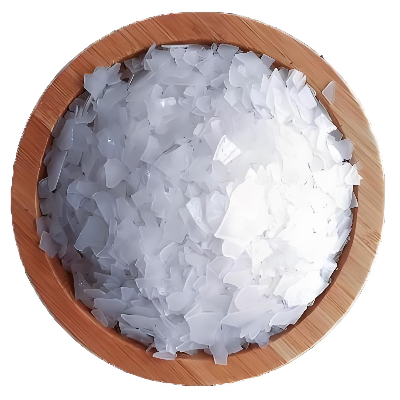
The two main raw materials for producing magnesium oxide boards are magnesium oxide and magnesium chloride.Mostly, 46% hexahydrate magnesium chloride flakes or 46% hexahydrate magnesium chloride powder are used.(46% magnesium chloride flakes are cheaper than powder of the same grade, but dissolve more fully.)
Yuze Magnesium Chloride mainly supplies magnesium chloride, so we will not discuss magnesium oxide here.
Reason 1: Excess sodium ions (high sodium chloride content)
If the problem is caused by magnesium chloride, it is usually due to excessively high sodium ion content (high sodium chloride).When magnesium chloride contains large amounts of sodium chloride, movable sodium ions in the crystal gaps can cause:
· surface efflorescence
· deliquescence
· loss of gloss
· pulverization
· significant reduction in structural strength
Unqualified magnesium chloride with high sodium chloride content will lead to sodium chloride efflorescence on finished products.
Single-shaft mixing easily forms eddies and dead corners, resulting in insufficient mixing.This causes localized over-reaction or incomplete reaction, leading to uneven product strength and moisture return.
When air humidity is high, magnesium oxide boards absorb moisture from the air, becoming damp, forming water droplets or even flowing liquid.Excess and residual magnesium chloride inside the board easily causes moisture return.
When excessive filler increases the mixture viscosity, wrongly adding magnesium chloride solution to adjust consistency will destroy the molar ratio, which is a production process issue.
In summary:If the problem is caused by magnesium chloride, buyers should emphasize sodium ion content when purchasing.To improve dissolution uniformity during mixing:
· extend mixing time
· or use hexahydrate magnesium chloride powder
II. Difference Between Moisture Absorption Caking and Pipe-Shedding Blocks of Hexahydrate Magnesium Chloride
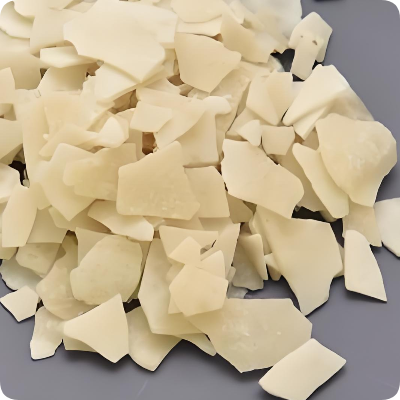
Many customers cannot distinguish between the two main types of caking in hexahydrate magnesium chloride:
Both hexahydrate and anhydrous magnesium chloride have strong hygroscopicity.Before delivery, our sales staff always remind customers to check package integrity and follow proper storage requirements.
· Early stage: loose and relatively regular caking, easy to crush by hand.
· Later stage: the entire bag becomes hard.
These blocks form during regular equipment cleaning and maintenance.They are hard, do not fall off in time during cleaning, and later enter the packaging system with the product conveyor belt.
Features:
· relatively large and irregular shape
· high hardness
At Yuze Magnesium Chloride, both anhydrous and hexahydrate magnesium chloride will not cake within the warranty period if properly sealed.
· Normal warranty: 1 year
· Our products can actually remain stable for 2 years or longer in tests.
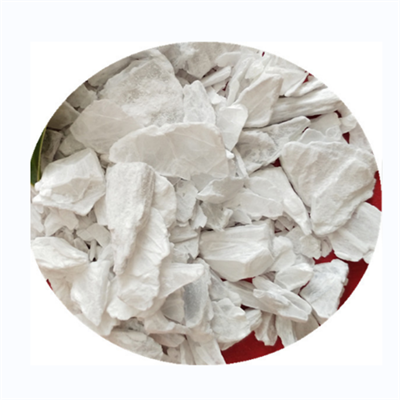
For example, our exported anhydrous and hexahydrate magnesium chloride are shipped by sea for 1–2 months (high humidity, harsh storage conditions), so we pay close attention to sealing and anti-caking performance.
The above is a brief introduction from Yuze Magnesium Chloride Manufacturer on the causes of moisture return and efflorescence in magnesium oxide boards, and the difference between moisture absorption caking and pipe-shedding blocks of hexahydrate magnesium chloride.
If you have questions about our products, please follow Weifang Yuze Magnesium Chloride Manufacturer (main products: anhydrous magnesium chloride and hexahydrate magnesium chloride).