E-mail:
tina@yuzechemical.com
Contact: Tina Pan
Email: tina@yuzechemical.com
Wechat: +8618660611992
Whatsapp: +8618660611992
Address: Xinxing Village, Dajiawa Street, Binhai Economic Development Zone,Weifang City ,Shandong Province,China.
Website: www.wfyuzehg.com
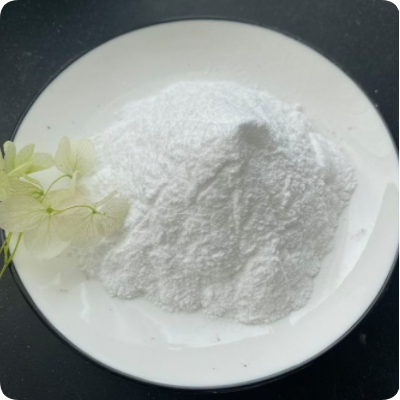
The following is an introduction to the factors affecting the price, characteristics of the 98% anhydrous magnesium chloride in our Yuze anhydrous magnesium chloride manufacturer, as well as the advantages of our manufacturer.
Anhydrous magnesium chloride (chemical formula: MgCl₂, CAS No.: 7786-30-3, molecular weight: 95.21) is an important inorganic chemical raw material. Among them, the product with 98% content (main content ≥ 98.0%) has become the preferred raw material for mainstream industrial applications due to its moderate purity and outstanding cost performance. It is widely used in metallurgy, building materials, environmental protection, chemical additives and many other fields, balancing practicality and economy. Next, the editor from our anhydrous magnesium chloride manufacturer will introduce the 98% anhydrous magnesium chloride produced by our Yuze Magnesium Chloride Manufacturer from the following aspects.
I. Characteristics of 98% anhydrous magnesium chloride
The characteristics of 98% anhydrous magnesium chloride focus on "cost-effective purity". Its physical and chemical properties and reaction activity can meet the needs of most industrial scenarios. Compared with products with 99% content, it is more economical in terms of impurity control and production processes. The details are as follows:
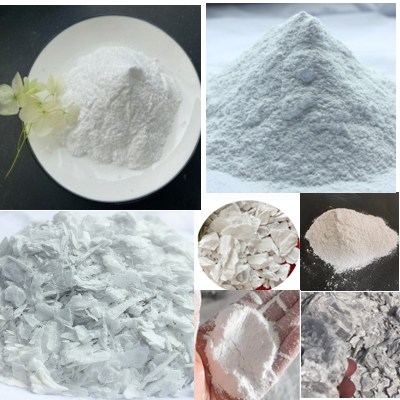
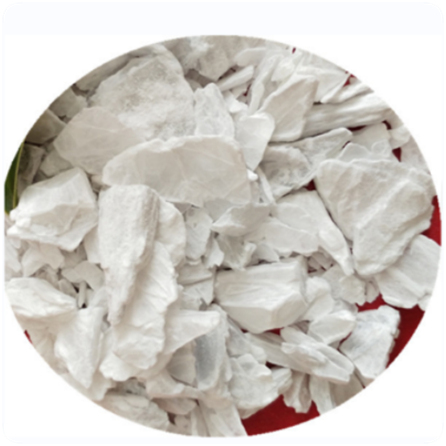
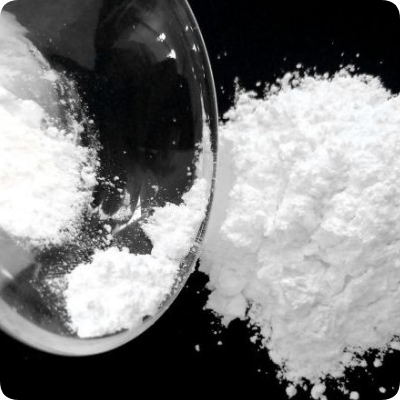
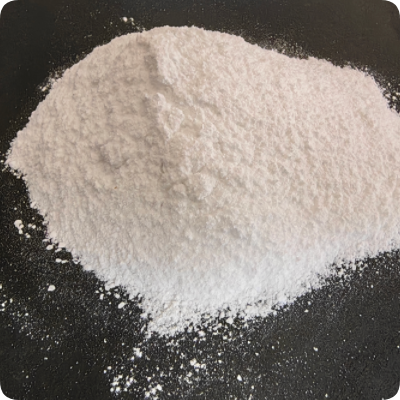
1. Appearance and Physical-Chemical Properties: The pure product is a white to slightly yellow hexagonal crystal, commonly available in the forms of flakes, granules or powder (customizable according to requirements), with no obvious odor. Its density is about 2.31g/cm³ (20℃), melting point is 712-714℃, and boiling point is 1410-1412℃. It has good high-temperature stability, does not decompose and maintains stable performance under conventional high-temperature working conditions, making it suitable for most industrial scenarios such as metallurgy and building materials. Its moisture content is ≤ 1.0%, free of obvious crystal water impurities, which can effectively avoid performance fluctuations caused by water content in ordinary low-content magnesium chloride and meet the basic purity requirements of industrial production.
2. Solubility and Hygroscopicity: It is easily soluble in water and ethanol with a fast dissolution rate. The aqueous solution is basically clear, and a small amount of impurities will not affect normal use. A small amount of heat is released during the dissolution process; at the same time, it has strong hygroscopicity and tends to absorb moisture when exposed to air. If not properly sealed, slight moisture absorption and caking may occur. Therefore, only basic moisture-proof measures are required during storage and transportation, without excessively strict protection.
3. Chemical Stability and Reaction Activity: It has stable chemical properties, is non-flammable, and has no obvious hazardous characteristics. It does not react violently with most substances, but should not be stored together with oxidants. Due to its qualified purity, the content of impurity ions (such as calcium, sodium, iron, and silicon) is controlled within a reasonable range (≤ 2.0%), and its reaction activity can meet the needs of most industrial production. It can effectively reduce side reactions in downstream production, ensure the basic qualification rate of finished products, and is suitable for conventional industrial scenarios such as metallurgical auxiliary, building materials preparation and environmental protection treatment.
II. Factors Affecting the Price of 98% anhydrous magnesium chloride
Why is there a price difference for 98% anhydrous magnesium chloride? The specific analysis is as follows:
1. Differences in Quality: Although all are called 98% anhydrous magnesium chloride, each manufacturer differs in terms of technology, raw materials, etc. For example, it can be either a main product or a by-product type of anhydrous magnesium chloride. In addition, there are differences in impurities in the aqueous solution. Products with relatively higher content, fewer impurities (low water-insoluble content and clear solution) will have a higher price.
2. Differences in Grades: The grade here refers to the difference in application, such as the difference between food grade and industrial grade. The parameters of 98% food-grade anhydrous magnesium chloride are obviously superior to those of 98% industrial-grade anhydrous magnesium chloride.
3. Differences in Appearance, Shape and Color: In our Yuze Manufacturer, the 98% anhydrous magnesium chloride is available in powder (main product), flakes and large/small blocks in terms of shape. The appearance color also includes white, grayish white, original color, etc.
4. Differences in Packaging: Our packaging options include 25kg/bag, 50kg/bag, 500kg/bag and 1000kg ton bag; customized packaging is also available. Due to differences in the quality of individual packages, there is a relatively large overall price gap.
III. Advantages of Yuze 98% anhydrous magnesium chloride
1. Product Advantages: With 13 years of experience in the magnesium chloride industry, our products are more mature and stable, and can be applied to most uses. For products with special parameter requirements, we can also provide separate production and customization services. We can recommend more suitable products (98% anhydrous magnesium chloride of different qualities and prices) according to the needs of different users.
2. Quality Control: Our anhydrous magnesium chloride products adopt a combination of third-party testing and factory sampling testing for quality control. A testing laboratory is equipped in our factory, which can meet the requirements of multiple tests for a single batch.
Previous: Anhydrous Magnesium Chloride
Next: No Information