E-mail:
tina@yuzechemical.com
Contact: Tina Pan
Email: tina@yuzechemical.com
Wechat: +8618660611992
Whatsapp: +8618660611992
Address: Xinxing Village, Dajiawa Street, Binhai Economic Development Zone,Weifang City ,Shandong Province,China.
Website: www.wfyuzehg.com
Throughout production, warehousing and export container shipping at magnesium chloride factories, magnesium chloride powder and flakes are highly susceptible to moisture absorption, deliquescence and caking. This not only compromises product appearance and purity, but also causes inaccurate feeding metering, reduced dissolution efficiency. Worse still, it tends to trigger moisture bleeding and efflorescence, strength loss and deformation of downstream magnesium oxychloride products, resulting in substantial degradation of end use performance.
Due to its larger specific surface area, magnesium chloride powder absorbs moisture and cakes far faster than magnesium chloride flakes, posing a key quality control challenge for magnesium chloride manufacturers. This article thoroughly analyzes the root causes of moisture triggered caking for magnesium chloride, and delivers a complete anti caking solution tailored for mass production, long term warehousing and container ocean shipment. It addresses moisture related caking issues from three dimensions: upgraded packaging, warehouse management and marine transport moisture protection.
Magnesium chloride is a strongly hygroscopic inorganic salt with an extremely low critical relative humidity, so it readily absorbs water vapor from ambient air under normal temperature conditions. Fine magnesium chloride powder features high moisture sensitivity because of its large air contact surface area. Though more stable than powder, magnesium chloride flakes still deliquesce and cake rapidly under high humidity or temperature fluctuation conditions. The contributing factors fall into intrinsic material properties and external environmental conditions.
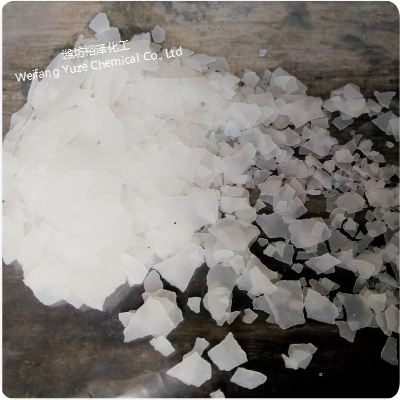
Magnesium chloride hexahydrate manufactured by magnesium chloride factories has strong hydration reactivity, and quickly forms hydrates upon contact with water vapor — this is the fundamental source of caking.
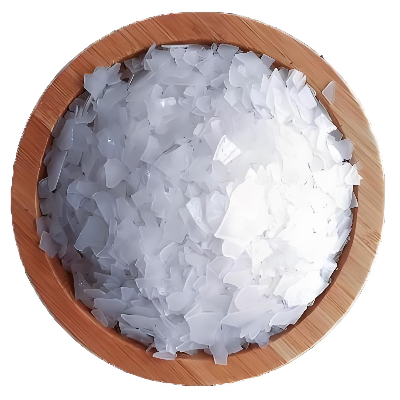
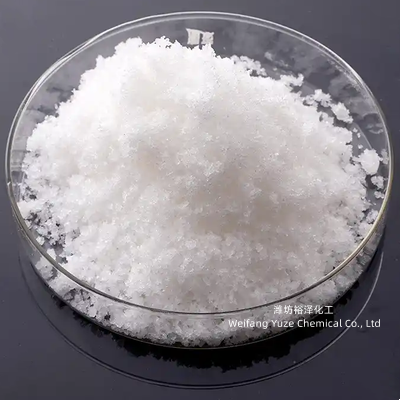
Magnesium chloride powder: Fine particle size, abundant pores and large specific surface area enable fast adsorption of trace moisture in air. A saturated liquid film instantly forms on particle surfaces; particles stick together and build crystal bridges, giving rise to large area caking and hard compaction within a short period. This form creates frequent quality control headaches for magnesium chloride plants. For this reason, YUZE Chemical Factory does not recommend magnesium chloride powder unless specifically requested by customers (anhydrous magnesium chloride powder is comparatively less prone to caking).
Magnesium chloride flakes: Their relatively dense flake structure slows moisture uptake. Nevertheless, surface thin flakes soften upon moisture adsorption and stick together under stacking compression to form clumped masses. Higher contents of impurities such as sodium chloride and calcium chloride further weaken moisture resistance and accelerate caking of magnesium chloride flakes.
Crystallization mechanism: After magnesium chloride powder or flakes absorb moisture, partial dissolution occurs. Minor ambient temperature swings drive water evaporation followed by recrystallization, generating rigid crystal networks that solidify into hard lumps which cannot loosen naturally.
Warehouse related issues: Poor warehouse sealing, ground moisture ingress, improper ventilation and ambient relative humidity above 50%; over high stacking height and long term compression accelerate crystal bridge formation for both powder and flakes; prolonged inventory turnover aggravates moisture related deterioration.
Key risks in container ocean transport: Sharp day night temperature differences at sea generate substantial “container rain” condensation inside containers. Moisture from wooden container floors and condensation on cold container walls penetrates packaging bags. Open air port storage and loading unloading under rainy windy weather greatly raise caking risks for magnesium chloride powder and flakes.
Sealed barrier packaging constitutes the first line defense against caking for magnesium chloride powder and flakes. Given the extreme moisture absorption tendency of magnesium chloride powder, graded sealing packaging technology is adopted, different from standard packaging for magnesium chloride flakes, to fully block water vapor penetration and fit domestic storage and long haul container shipping scenarios.
Special grade packaging for magnesium chloride powder (high moisture barrier grade): Double layer structure of aluminium foam composite inner liner plus heavy duty PP woven outer bag. The inner liner meets specified thickness requirements with zero pinholes and outstanding water vapor barrier performance to fully isolate air moisture. After filling, the inner liner is fully heat sealed to eliminate gas leak gaps. The outer bag is double stitched for reinforcement against rupture and air leakage caused by rough handling during ocean shipment. This is the standard export grade packaging for magnesium chloride powder from manufacturers.
Standard packaging for magnesium chloride flakes (standard moisture barrier grade): Thickened PE inner liner bag (≥0.12 mm thickness) matched with PP woven outer bag. Complete heat sealing replaces traditional rope tying closures to eliminate moisture ingress through bag seam gaps, meeting regular storage and ocean shipping moisture proof requirements with higher cost effectiveness.
Bulk ton bag packaging: For large volume shipments of powder or flakes, ton bags must be fitted with an integrated heat sealed aluminium foil inner liner. Simple wrapping is prohibited to avoid moisture permeation through large area fabric surfaces.
Product quality is the core factor: High purity magnesium chloride flakes and powder with low impurity levels deliver longer shelf life even under identical storage conditions. According to practical tests conducted at YUZE Magnesium Chloride Factory, ordinary quality products can resist caking for roughly 12 months, while YUZE produced magnesium chloride powder and flakes achieve 15 24 months caking free service life.
Mass scale caking incidents frequently stem from poor detail process control rather than intrinsic product defects. The following misconceptions should be avoided:
Misconception 1: Relying solely on woven outer bags without sealed inner liners. Water vapor penetrates directly, leading to fast caking of magnesium chloride powder and flakes.
Misconception 2: Rope tied bag closures instead of heat sealing. Continuous moisture ingress through seams inevitably causes partial caking during long distance ocean shipment.
Misconception 3: Hot filled products are packed and warehoused immediately. Internal condensation builds up inside bags and triggers spontaneous internal caking.
Previous: Why Do Magnesium Chloride Flakes Vary in Color(White & Bittern Flakes)?
Next: No Information