E-mail:
tina@yuzechemical.com
Contact: Tina Pan
Email: tina@yuzechemical.com
Wechat: +8618660611992
Whatsapp: +8618660611992
Address: Xinxing Village, Dajiawa Street, Binhai Economic Development Zone,Weifang City ,Shandong Province,China.
Website: www.wfyuzehg.com
A long time ago, one of our overseas customers sent our product to a third-party lab for testing and gave us positive feedback: the product was excellent. The package label showed 46% content, while the actual tested result reached 46.8%. This customer was new to the magnesium chloride industry. In fact, you cannot judge magnesium chloride quality only by its main content. The most reliable reference is the COA (Certificate of Analysis). Today, Yuze Magnesium Chloride Supplier will walk you through how to read a magnesium chloride COA report.
1. Product Name & Grade: Confirm whether it is magnesium chloride hexahydrate, anhydrous magnesium chloride, food grade, industrial grade or feed grade.
2. Production Date / Test Date: We carry out multiple sampling tests during production. Test results with a recent test date better reflect the quality of bulk cargo. In the past, unstable technology caused large quality differences between batches; nowadays, batch-to-batch consistency is much better.
3. Applicable Standard: Standards for industrial, food and feed grades differ and cannot be used interchangeably.
The molecular formula of magnesium chloride hexahydrate is MgCl₂·6H₂O with a molecular weight of 203.30, and the molecular weight of MgCl₂ is 95.21.
· Calculated as MgCl₂: theoretical maximum value = 95.21 ÷ 203.30 ≈ 46.8%
· Calculated as MgCl₂·6H₂O: theoretical value is close to 100%
If the report states “purity ≥99%”, do not rush to conclude it is high purity. This figure is calculated based on the whole hexahydrate crystal. Converted to MgCl₂, it is only around 46%. These two calculation bases are completely different, so you must check the reference basis clearly on the COA header. In the industry, “46% flakes” and “47% high-white flakes” always refer to content calculated as MgCl₂.
Product Type | Typical MgCl₂ Content (as MgCl₂) | Notes |
Industrial magnesium chloride hexahydrate | ≥44.5% | Regular grade |
Premium industrial magnesium chloride hexahydrate | ≥46.0% | Close to theoretical value |
Feed grade magnesium chloride hexahydrate | ≥46.5% | Strict requirements |
Food grade magnesium chloride hexahydrate | ≥46.4% | Plus hygiene specifications |
Acid-process high-white flakes | Around 47% | High purity, widely used for export |
Anhydrous magnesium chloride | ≥98% | Calculated as MgCl₂ |
Judgement guide: 46% MgCl₂ is normal for hexahydrate magnesium chloride. Results between 42%–45% usually belong to regular low-grade products. If a hexahydrate magnesium chloride is marked above 50%, the label is very likely incorrect.
Common impurity items on COA include:
Indicator | Typical Limit (Industrial Grade) | Typical Limit (Food Grade) | Importance |
Calcium (as Ca²⁺) | ≤0.15% | ≤0.10% | Affects purity and downstream reactions |
Sulfate (as SO₄²⁻) | ≤1.00% | ≤0.40% | Critical for many industries |
Alkali metal chloride (as NaCl) | ≤0.9% | ≤0.9% | Shows residual salt content |
Insoluble matter | ≤0.10% | ≤0.10% | Affects clarity after dissolution |
Iron (Fe) | Follow standard | Follow standard | Impacts whiteness and food applications |
Heavy metals (as Pb) | Follow standard | ≤1 mg/kg | Mandatory for food & feed grade |
Arsenic (As) | Follow standard | ≤0.5 mg/kg | Mandatory for food grade |
Ammonium (NH₄) | — | ≤50 mg/kg | Special requirement for food grade |
The parameter sheet for our magnesium chloride (industrial, food, feed grade) lists standard limits alongside actual tested values for easy comparison.
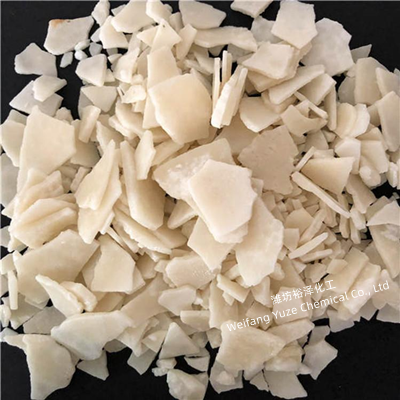
· Appearance & Color: White, off-white or slight yellow are acceptable. Match the bulk cargo with your approved sample.
· Particle Size: Flake, granular or powder form. Particle shape directly affects dissolution speed.
· Whiteness: Obvious difference between high-white flakes and normal flakes.
· pH (aqueous solution): Generally weakly acidic to neutral.
· Solubility & Clarity: Turbidity or sediment indicates high insoluble matter or impurities.
Grade | Common Standard | Focus Items |
Industrial Grade | HG/T 2327, HG/T 2678 | Main content, calcium, sulfate, insoluble matter |
Food Grade | GB 25584-2010 National Food Safety Standard Food Additive Magnesium Chloride | Main content + lead, arsenic, ammonium |
Feed Grade | NY/T 917-2004 Feed Additive Magnesium Chloride | Main content, heavy metals, arsenic |
Chemical Reagent | GB/T 672-2006 | Full specs: purity, clarity, phosphate, heavy metals |
Note: If you have special requirements for any parameter, inform us in advance. We will arrange more frequent targeted testing.
Weifang Yuze provides two versions of COA for customers: one is our in-house sampling test report during production, and the other is third-party laboratory test report for more reliable data.
Next: No Information