E-mail:
tina@yuzechemical.com
Contact: Tina Pan
Email: tina@yuzechemical.com
Wechat: +8618660611992
Whatsapp: +8618660611992
Address: Xinxing Village, Dajiawa Street, Binhai Economic Development Zone,Weifang City ,Shandong Province,China.
Website: www.wfyuzehg.com
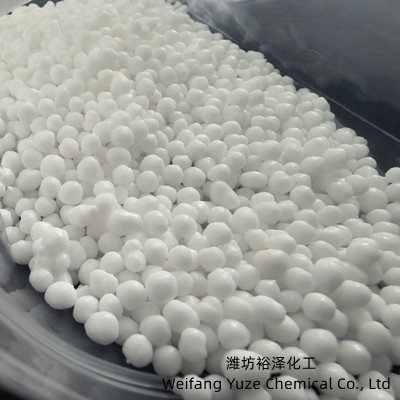
Magnesium chloride granules generally refer to magnesium chloride hexahydrate granules, MgCl₂·6H₂O, with a typical content of 46%. Below are common specifications for magnesium chloride granules:
Particle Size Type | Particle Size Range | Shape | Application Scenarios |
Fine Granules | 0.5–1.5 mm | Spherical / irregular small crystals | Aquaculture, feed addition, automatic micro-dosing |
Standard Granules (Main for export) | 1–3 mm | Fluidized bed spherical granules | Feed grade, overseas de-icing, export orders |
Large Granules | 2–4 mm / 3–6 mm | Roller-pressed pillow-shaped / large spherical granules | Road spreading for de-icing, dust suppression, low dust generation |
Custom Screening | Customized per customer sieve | As required | High-end customized products |
Notes: Drum granulation produces granules with wide particle size distribution; fluidized bed granulation delivers the most uniform particle size; roller extrusion mostly yields pillow-shaped granules instead of perfect spheres.
Although the finished products may show round or semi-round shapes, manufacturers in the magnesium chloride industry uniformly call them magnesium chloride granules. Before forming magnesium chloride granules, manufacturers first produce magnesium chloride flakes, then reshape the flakes into granules. Therefore, the color of final magnesium chloride granules depends on the color of the raw magnesium chloride flakes. Simply put, magnesium chloride flakes are the raw material for magnesium chloride granules. The production of flakes and granules adopts two separate sets of production processes.
We, Yuze Magnesium Chloride Manufacturer, will introduce the production technologies for magnesium chloride granules.
1. Drum Granulation (Wet Agglomeration Granulation, traditional process) Principle: Powder tumbles inside the drum while concentrated brine is sprayed as binder. Powders gradually roll up into spherical granules, followed by drying and cooling.
✅ Advantages: Low equipment investment, large production capacity
❌ Disadvantages: Poor sphericity, low particle strength, heavy dust, broad particle size distribution, prone to caking Application: Ordinary industrial magnesium chloride granules
2. Fluidized Bed Granulation (Advanced mainstream granulation technology) Principle: Hot air suspends seed granules in fluidized state. Concentrated refined magnesium chloride solution is continuously sprayed from the top. Droplets crystallize and grow on seed surfaces, completing granulation and drying in one step.
✅ Advantages: Good sphericity, uniform particle size, low dust, high particle strength; anti-caking coating agent can be added online
❌ Disadvantages: High equipment investment and strict process control requirements Application: Export-grade, feed-grade and high-spec magnesium chloride granules
3. Double Roller Dry Extrusion Granulation (Popular for de-icing agents) Principle: Dry magnesium chloride powder is fed into twin rollers for high-pressure extrusion. Pillow or oval granules are formed through roller dies with minimal water addition.
✅ Advantages: No heavy drying required, low energy consumption, dense and break-resistant granules
❌ Disadvantages: Non-spherical shape, rough surface; raw material must be dry powder Application: Composite de-icing granules (magnesium chloride mixed with calcium chloride / CMA)
4. Spray Granulation (Spray Drying Granulation, high-purity / fast-dissolving grade) Principle: Concentrated magnesium chloride slurry is atomized through nozzles into a drying tower. High-temperature hot air instantly evaporates moisture to form hollow spherical granules.
✅ Advantages: Perfect spherical shape, fast dissolution rate
❌ Disadvantages: Limited output, expensive equipment, loose granules with low strength Application: Food grade, high-end bath salt fast-dissolving granules
5. Extrusion Spheronization (Fine small granules) Principle: Wet material is extruded through sieve plates into thin strips, cut off and polished into nearly spherical granules by spheronizer.
✅ Advantages: Precisely controllable particle size
❌ Disadvantages: Low capacity, for small-batch high-purity products Application: Laboratory use, small-pack specialty magnesium salts
Please note: Some of the above granulation processes require adding calcium chloride or industrial salt, due to magnesium chloride’s inherent properties and processing environment. Pure magnesium chloride granules without additives are relatively rare.
II. Quick Comparison Table
Granulation Technology | Particle Shape | Dust | Strength | Cost | Typical Application |
Drum Granulation | Near-spherical | High | Low | Low | Ordinary magnesium chloride granules |
Fluidized Bed Granulation | Spherical | Low | Medium-High | Medium-High | Feed grade magnesium chloride granules |
Double Roller Extrusion | Pillow / Oval | Medium | High | Medium | Composite de-icing granules |
Spray Granulation | Hollow Spherical | Low | Low | High | Food, bath salt, fast-dissolving grade |
Extrusion Spheronization | Small Spheres | Low | Medium | High | Fine specialty magnesium salts |
Even with minor differences in appearance and color, the price of magnesium chloride granules varies greatly depending on production equipment. Regular industrial magnesium chloride granules are priced roughly at 700–900 CNY/ton. Products manufactured by high-cost equipment sell for about 1200–1800 CNY/ton. Food grade magnesium chloride granules are more expensive.
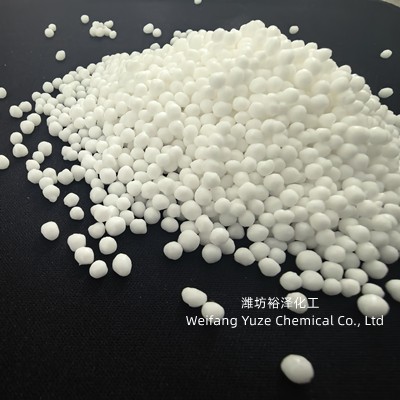
With 13 years of experience in the magnesium chloride industry, we notice some international buyers overly focus on color and sphericity when selecting magnesium chloride granules, which leads to higher procurement costs. Our recommendation: Prioritize technical parameters for your application first, then consider price, color and appearance. The granules will melt after use and will not retain their original shape or color permanently.
Next: No Information