E-mail:
tina@yuzechemical.com
Contact: Tina Pan
Email: tina@yuzechemical.com
Wechat: +8618660611992
Whatsapp: +8618660611992
Address: Xinxing Village, Dajiawa Street, Binhai Economic Development Zone,Weifang City ,Shandong Province,China.
Website: www.wfyuzehg.com
Is Magnesium Chloride a Salt?
A salt is a compound composed of metal ions (or ammonium ions) and acid radical ions. Magnesium chloride (MgCl₂) consists of magnesium ions (Mg²⁺) and chloride ions (Cl⁻), which conforms to the basic definition of a salt.
Magnesium Chloride: In its pure state, magnesium chloride is a typical salt compound with general properties of salts, such as ionizing into magnesium ions and chloride ions in aqueous solution.
Magnesium Chloride Solution: When magnesium chloride dissolves in water, magnesium ions undergo weak hydration with water molecules, yet this does not change its essence as a salt. Notably, magnesium ions in the solution may combine with hydroxide ions in water to form a small amount of magnesium hydroxide precipitate and release hydrogen ions, making the magnesium chloride solution slightly acidic.
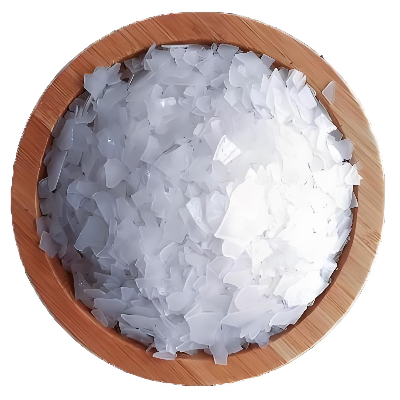
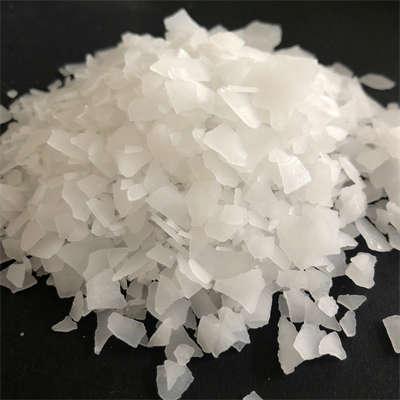
In the past, most magnesium chloride manufacturers near coastal areas produced magnesium chloride from brine that met standards after solar evaporation and concentration. Hence, it is often called flake magnesium chloride or magnesium salt. However, to meet higher customer quality requirements, most modern manufacturers produce it via chemical reactions (e.g., the neutralization of hydrochloric acid (HCl) and magnesium hydroxide (Mg(OH)₂)), industrial by-product purification, pharmaceutical intermediate recycling, etc. There are significant differences in application performance and quality between products from different processes.
The "salt" here refers to table salt. The core difference is that edible table salt contains no magnesium chloride, which can be verified by checking the ingredient list on salt packages. Specific differences are as follows:
· Table Salt (NaCl): Composed of sodium ions (Na⁺) and chloride ions (Cl⁻) at a ratio of 1:1. Sodium is an alkali metal with monovalent cations, forming a stable cubic crystal structure with chloride ions via ionic bonds.
· Magnesium Chloride (MgCl₂): Composed of magnesium ions (Mg²⁺) and chloride ions (Cl⁻) at a ratio of 1:2. Magnesium is an alkaline earth metal with divalent cations; two chloride ions are required to balance the charge, forming a hexagonal layered crystal structure.
Key Differences:
· Monovalent sodium ions vs divalent magnesium ions, leading to different ionic bond strengths and crystal structures.
· Magnesium ions in magnesium chloride have higher charge and stronger polarization on water molecules, resulting in easier hydrolysis.
· Appearance and Morphology:
o Table salt: White cubic crystals or powder with uniform particles.
o Magnesium chloride: White to colorless hexagonal flake crystals; similar to table salt in powder form but different in crystal morphology.
· Solubility and Hygroscopicity:
o Table salt: Soluble in water (solubility ≈ 36 g/100 mL at 20°C), weak hygroscopicity, stable in dry environments.
o Magnesium chloride: Highly soluble in water (solubility ≈ 54 g/100 mL at 20°C), extremely strong hygroscopicity; it rapidly absorbs moisture and deliquesces when exposed to air, requiring sealed storage.
· Taste:
o Table salt: Pure salty taste, widely used for daily seasoning.
o Magnesium chloride: Salty with obvious bitterness at high concentrations, not for direct consumption.