E-mail:
tina@yuzechemical.com
Contact: Tina Pan
Email: tina@yuzechemical.com
Wechat: +8618660611992
Whatsapp: +8618660611992
Address: Xinxing Village, Dajiawa Street, Binhai Economic Development Zone,Weifang City ,Shandong Province,China.
Website: www.wfyuzehg.com
Many buyers searching for pet safe ice melt are misled by packaging slogans. “Pet safe ice melt” is not a standardized product category with official certification. No regulatory authority has established dedicated pet safety grading standards for ice melt. To find deicers with minimal irritation to dogs and cats, focus on chemical composition instead of “pet friendly” labels.
To judge which deicer is gentler on animals, you first need to know what is actually on the market.
Sodium chloride (rock salt) — The cheapest option, effective above roughly −9 °C, and highly corrosive. Granules are sharp enough to cut paw pads, and heavy ingestion after licking can cause hypernatremia.
Calcium chloride — Fast-acting, strongly exothermic and effective at low temperatures, but contact with wet paw pads can easily cause burns, and it is highly corrosive. Ingestion can burn the mouth and stomach.
Magnesium chloride — Milder than calcium chloride with good low-temperature performance, but it is still a chloride salt. Large ingestion can cause gastrointestinal upset and electrolyte imbalance, and prolonged contact dries and reddens paw pads. Many finished products labelled "pet safe" use magnesium chloride as their base material.
Calcium magnesium acetate (CMA) — Chloride-free, biodegradable, with the lowest paw-pad irritation of any deicer type, very low corrosion and minimal odour. It is used in high-end residential communities, walkways, pet exercise areas, airports and regions with strict environmental controls. Its limitations are equally clear: limited performance at very low temperatures and a price well above chloride salts. It is also the eco-friendly deicing raw material that we, as a dedicated calcium magnesium acetate supplier, specialise in.
Blended deicers — Multiple raw materials mixed to balance melting speed, cost and corrosiveness. A large share of "eco-friendly ice melt" products on the market fall into this category.
One important fact: no deicer is completely harmless. Whatever the chemistry, heavy ingestion irritates the gastrointestinal tract, and residue on paws and skin causes dryness and irritation.
Clinical guidance from the ASPCA Animal Poison Control Center is more specific. Most calls involve pets that walked on treated pavement and then licked their paws at home. A lick or two usually produces only mild, self-limiting drooling, vomiting or diarrhoea. The genuinely dangerous scenario is a pet finding the bag and eating a large amount at once, which can cause severe vomiting and diarrhoea, dehydration and electrolyte imbalance; calcium chloride products can also burn the mouth and stomach.
Even acetate-based products such as CMA — widely regarded as having minimal side effects — carry a faint acetic odour before the product dissolves into snow. That odour comes from the raw material itself, not from an additive.
The selection logic should therefore be: given that ice must be cleared, choose the chemistry with the lowest risk of harm — do not go looking for a risk-free product.
Deicer | Risk to dogs and cats | Melting performance | Typical applications |
Calcium magnesium acetate CMA | Chloride-free, biodegradable, lowest paw-pad irritation | Slower than chloride salts, but inhibits re-freezing; limited at very low temperatures | Courtyards, community walkways, pet areas, airports, water protection zones, high-end campuses, environmentally regulated sites |
Magnesium chloride | Chloride salt; ingestion causes vomiting, diarrhoea and electrolyte imbalance; hygroscopic and exothermic, irritating with prolonged contact | Fast, effective at low temperatures | Base material of many "pet-friendly" blends; must be applied at controlled rates |
Calcium chloride | Strongest exothermic reaction; burns wet paw pads; ingestion can cause oral ulcers | Very fast, strong low-temperature performance | Severe-cold main roads; not recommended for pet areas |
Sodium chloride (rock salt) | Sharp granules can cut paw pads; heavy intake causes hypernatremia | Cheap; effective above about −9 °C | General roads; keep pets away where possible |
Blended deicers | Not a distinct chemistry — chloride salts (magnesium chloride, calcium chloride, sodium chloride) combined in set ratios, sometimes with corrosion inhibitors; risk follows the dominant salt | Tuned for speed and cost | General municipal and commercial use |
CMA's value lies in three properties holding true at once: chloride-free, biodegradable and low-corrosion. That is why it is used on airport runways, steel bridges and around water protection zones. The trade-off is equally clear: it typically costs 8–20 times as much as ordinary deicers. This is also why professional buyers do not simply ask "which brand is best" — they define the application first, then source from the right calcium magnesium acetate supplier.
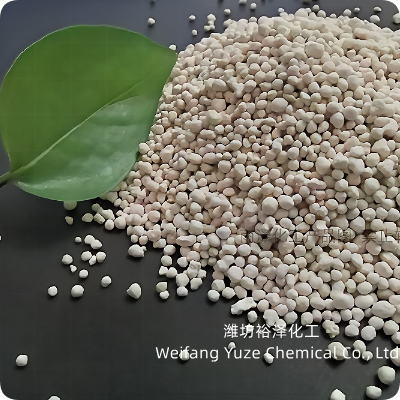
The words "pet-friendly" on the front of a bag carry no obligation. What actually filters out risk is the following.
1. Read the ingredient list, not the slogan.
Ingredients must be declared by chemical name — calcium chloride, magnesium chloride, urea, calcium magnesium acetate. Skip anything that says "eco formula" or "plant extract" without naming the chemistry. A qualified CMA supplier will proactively provide composition and content data.
2. Look for "chloride-free", not "low chloride".
Chinese group standards define a "non-chloride eco-friendly deicer" as one based mainly on organic salts and polyols, containing no chlorine or no more than 1% chloride content. This is the key indicator of whether a CMA product lives up to its name.
3. A "chloride-free" claim is more credible than "pet safe" — and check for standards backing.
GB/T 23851-2017 Deicing Agent is the current recommended national standard in China. It evaluates melting capacity, corrosion rates on metals and concrete, and effects on plants — but note that it does not cover pet safety. The standard filters out substandard products; it does not prove a product is safe for cats and dogs.
4. Avoid "fast-acting" products in pet areas.
Anything advertising "melts ice in minutes" is usually high-concentration calcium chloride or magnesium chloride. Use such products with caution in areas with dense pet traffic.
5. Ask for batch test reports.
A reliable calcium magnesium acetate supplier should be able to provide test data on composition, chloride ion content and corrosiveness — not just a brochure. For large procurement by property managers, airports or municipal projects, run a small trial batch before signing a long-term contract.
Choosing the right product is only step one. The rest depends on how it is used.
· Spread thinly before snow, clear it after. Never pile deicer into small mounds — the amount in a mound is exactly the dose that causes poisoning in a single ingestion.
· Let it fully dissolve. The brine produced after melting is more dilute than the product as applied; clear or sweep away the residue before letting pets outside.
· Put boots on dogs outdoors, or apply paw wax. At home, wash paws with warm water and dry between the toes — wiping with a damp cloth alone merely spreads the salt around.
· Storage: keep the original bag sealed and stored high up, well out of reach. The vast majority of severe cases involve pets chewing open packaging.
· Do not spread salt around stray-cat feeding stations or trash bins — cats lick their paws far more often than dogs.
Is calcium magnesium acetate ice melt really safe for pets?
Nothing is absolutely safe. CMA is chloride-free, biodegradable and the least irritating to paw pads of any deicer type, and its ingestion risk is comparatively low — but large ingestion can still cause gastrointestinal upset. Its positioning is "least harmful", not "harmless".
What is the difference between CMA, calcium chloride and magnesium chloride?
The difference is chemical: calcium chloride and magnesium chloride are chloride salts — fast-melting, strongly exothermic and highly corrosive. Calcium magnesium acetate is an organic salt — chloride-free, low-corrosion and biodegradable, but slower, less effective at very low temperatures, and several times more expensive.
Why is calcium magnesium acetate more expensive than ordinary deicers?
Raw material and processing costs are higher, and market prices typically run 8–20 times those of conventional deicers. Its value lies in low corrosion, chloride-free chemistry and environmental performance, which suits airports, bridges, water protection zones and high-end communities with strict environmental requirements.
How should I care for my dog's paws after a winter walk?
Wash with warm water and dry between the toes rather than wiping with a damp cloth alone. Boots or paw wax offer extra protection outdoors. Seek veterinary care promptly if drooling, vomiting or diarrhoea persists.
"Pet-safe ice melt" is, at heart, a marketing concept. What can actually be quantified and compared is chemistry, chloride content and corrosiveness. Where ice must be cleared, calcium magnesium acetate (CMA) is widely regarded as one of the lowest-risk deicers available — and choosing the right calcium magnesium acetate supplier, by checking the ingredient list, chloride-free evidence and test reports, matters far more than the dog on the bag.
Yuze is a calcium magnesium acetate manufacturer supplying chloride-free, biodegradable CMA deicers for airports, municipal projects, high-end communities and pet-friendly public spaces.
Previous: How to Read Magnesium Chloride COA Report - Yuze Magnesium Chloride Supplier
Next: Magnesium Chloride Brine Interactive Table: Temperature – Density – Concentration