E-mail:
tina@yuzechemical.com
Contact: Tina Pan
Email: tina@yuzechemical.com
Wechat: +8618660611992
Whatsapp: +8618660611992
Address: Xinxing Village, Dajiawa Street, Binhai Economic Development Zone,Weifang City ,Shandong Province,China.
Website: www.wfyuzehg.com
46% magnesium chloride flakes belong to the magnesium chloride hexahydrate product category in magnesium chloride factories. Names such as 46% brine flakes, 46% white flakes, and 46% magnesium salt flakes all refer to the same product — 46% magnesium chloride hexahydrate. Although they are all called magnesium chloride flakes on the market, why do their prices differ? Below, our team at Yuze Magnesium Chloride Factory will walk you through the differences:
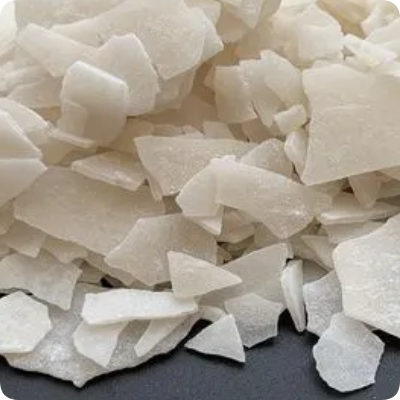
As we all know, the traditional 46% magnesium chloride flakes are commonly called brine flakes. These 46% brine flakes are produced through purification of seawater after solar evaporation. Similar processes and raw materials are also used for lake magnesium and well-extracted magnesium chloride.
As users demand higher product quality, most manufacturers now adopt chemical synthesis processes, using MgO or MgCO₃ + hydrochloric acid. This method results in fewer impurities, higher and more stable content, and is also one of the main products of our Yuze Chemical.
There are also by-product types, such as by-products from potassium nitrate production or pharmaceutical intermediates. The main advantage of these by-product types is their low price.
So although we call them all magnesium chloride hexahydrate due to different processes and raw materials, the differences in manufacturing steps and raw materials lead to price gaps.
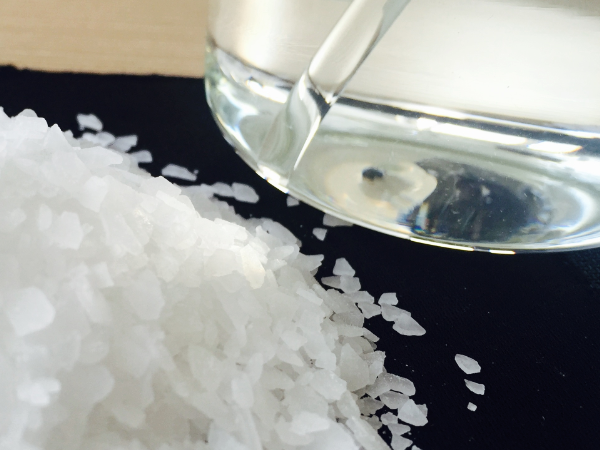
The 46% magnesium chloride flakes in magnesium chloride hexahydrate are classified by quality into food grade, industrial grade, feed grade, and agricultural grade. The differences between grades are mainly reflected in parameter variations, such as SO₄²⁻, Ca²⁺, H₂O, K, Na, Fe, Si, etc.
Because each industry has different usage requirements, some industries place emphasis on aqueous solution clarity, water-insoluble content, and amount of sediment. The fewer the impurities, the higher the content, and the lower the water-insoluble content — the higher the price of the magnesium chloride hexahydrate, and the more stable the quality.
Physical form refers to the appearance of magnesium chloride hexahydrate. Among all forms, flakes are the most commonly used. This is because powdered and granular magnesium chloride hexahydrate are both processed from flakes. Even at the same quality level, additional production steps are required, which increases costs and therefore creates price differences.
The color difference of 46% magnesium chloride flakes is the most intuitive distinction. This is mainly related to Point 1 (factory processes and raw materials) above. The comparison is shown in the table below:
Grade | Color | Appearance Features |
White / Refined Grade | Transparent, semi-transparent, milky white | Thin flakes, crystal clear, neat edges |
Standard Industrial Grade | Light yellow, gray-white | Thicker flakes, uneven sizes |
Brine Flakes | Light yellow | Relatively large and thick flakes |
By-product / Low Grade | Earthy yellow, brown | High impurity content, lowest quality |
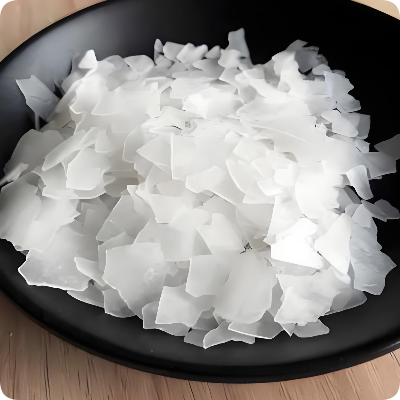
46% is only the minimum labeled content of magnesium chloride, not a quality benchmark. The real differences lie in: color → water dissolution clarity → impurity indicators → application grade. In some cases, although the flakes look white and the price is very low, the parameters and post-dissolution performance are poor. So choose carefully.
Our Yuze Magnesium Chloride Hexahydrate Factory has been in this industry for 13 years. We can provide stable and cost-effective magnesium chloride hexahydrate products for users with different applications. Our products have been exported to Southeast Asia, North America, South America, Europe, the Middle East, and many other regions. Some customers have been cooperating with us for up to 10 years. If you would like to learn more about magnesium chloride products, please follow us.
Previous: What is magnesium chloride(hexahydrate & anhydrous magnesium chloride)?
Next: The Price of Magnesium Chloride Is Primarily Determined by Its Quality