E-mail:
tina@yuzechemical.com
Contact: Tina Pan
Email: tina@yuzechemical.com
Wechat: +8618660611992
Whatsapp: +8618660611992
Address: Xinxing Village, Dajiawa Street, Binhai Economic Development Zone,Weifang City ,Shandong Province,China.
Website: www.wfyuzehg.com
The three-component system of magnesium cement consists of lightly burned magnesium oxide, aqueous magnesium chloride solution and water. Magnesium chloride mainly serves as a curing and thickening agent in this system. Without qualified magnesium chloride, mixing magnesium oxide with plain water will only produce loose, low-strength magnesium hydroxide powder that cannot harden and take shape.
I. Standard Grades of Magnesium Chloride Specially Used for Magnesium Cement (Mandatory Industrial Specifications)
Two core standards apply:JC/T 449-2008 Raw Materials for Magnesium Cementitious Materials and WB/T 1018-2002 Industrial Magnesium Chloride for Magnesite Products.
Common Grades & Types:
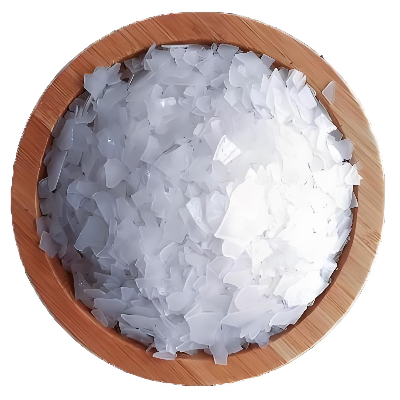
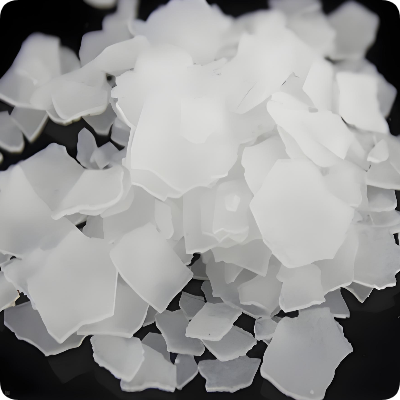
Hexahydrate Magnesium Chloride White Flakes (MgCl₂·6H₂O, flake/powder magnesium halide, the mainstream material for 90% of factories)
Required Technical Parameters
Impurity Item | Maximum Allowable Limit | Explanation |
Sodium Chloride (NaCl) | ≤1.5% | Free sodium ions readily absorb moisture, causing halogen efflorescence and surface water seepage on finished products |
Potassium Chloride (KCl) | ≤0.7% | Aggravates deliquescence and forms white bloom on product surfaces |
Calcium Chloride (CaCl₂) | ≤1.0% | Reduces crystal stability and triggers cracking & deformation |
Sulfate Ions (SO₄²⁻) | ≤3.0% | Forms loose sulfate compounds and drastically lowers mechanical strength |
Water-Insoluble Matter | ≤0.5% | Causes black spots, air voids and local friability |
Subtypes & Applicable Scenarios
1.Flake-shaped Hexahydrate Magnesium Chloride (White Flakes)
It offers a favorable cost-performance ratio with moderate dissolution speed. Suitable for magnesium fireproof boards, ventilation ducts, lightweight partition walls, magnesite manhole covers and general handicrafts, packed in 25kg woven bags.
Decades ago, brine magnesium halide flakes or powder were widely adopted, while high-purity white flake magnesium chloride has become the dominant choice nowadays.
Powdered Hexahydrate Magnesium Chloride
It dissolves rapidly and enables even preparation of brine solutions, ideal for automated production lines, thin panels, small molded parts and fast-setting products.
However, powdered hexahydrate magnesium chloride comes at a higher price. Under identical storage conditions and product quality standards, powder tends to agglomerate much more easily than white flakes.
2.Anhydrous Magnesium Chloride (MgCl₂, high purity, low risk of halogen efflorescence)
Purity: MgCl₂ ≥ 98%~99.5%, nearly free of crystal water
Ultra-low impurities: Total sodium, calcium and potassium impurities < 0.3%
Applications: High-standard outdoor products, imitation marble, light-transmitting panels, components for permanently humid environments, and products requiring zero halogen efflorescence
Drawbacks: Relatively high price; releases substantial heat upon dissolution in water
II. Three Core Functions of Magnesium Chloride in Magnesite Cement Products
Accelerate the hydration rate of magnesium oxide: Magnesium chloride undergoes hydrolysis and neutralization reactions with hydration products, promoting the dissolution and hydration of magnesium oxide. It ultimately reacts with magnesium hydroxide (Mg(OH)₂), the hydration product of magnesium oxide, to form stable 5·1·8 or 3·1·8 crystal phases.
Increase the content of dispersed substances in magnesium hydroxide colloidal solution: Magnesium chloride acts as a solvent and significantly accelerates the setting and hardening of the whole system.
Adsorb water trapped between magnesium hydroxide colloidal particles to enhance product strength: During the reaction, magnesium chloride adsorbs free water surrounding Mg(OH)₂ particles, maximizing the formation of the high-strength 5·1·8 crystal phase after magnesium cement hardens.
III. Impacts of Magnesium Chloride on the Performance of Magnesite Cement Products
Delivers high compressive strength to hardened magnesite cement: It reacts with MgO and water to form an interlocking network structure of 5·1·8 crystal phases. This robust hinged crystal framework can withstand extreme compressive loads.
Reduces the water resistance of magnesite cement: The bonding points of the 5·1·8 crystal phase formed jointly with magnesium oxide are easily dissolved by water, breaking down the crystal structure and weakening the finished product. This water-susceptible characteristic creates a major disadvantage for magnesite cement.
Grants excellent low-temperature resistance to magnesite products: Magnesium chloride itself functions as an industrial antifreeze agent.
Endows superior fire resistance to magnesite cement: Magnesium oxide has a melting point of 2270°C, while magnesium chloride releases chlorine gas at 118°C to rapidly smother flames.
Regulates product toughness: Apart from the dosage of reinforcing fibers, magnesium chloride content also affects toughness. Insufficient magnesium chloride reduces the formation of 5·1·8 crystals, leading to obvious brittleness and friability. Increasing the magnesium chloride dosage noticeably mitigates brittleness.
IV. Practical Selection Guide for Different Grades of Magnesium Chloride
General civil building panels (fireproof boards, partition walls, ventilation ducts, standard manhole covers)
Recommended material: Hexahydrate magnesium chloride flakes with MgCl₂ ≥ 45%
Advantages: Low cost, easy dissolution and stable mixing ratios, suitable for indoor dry environments.
Automated production lines, thin lightweight parts, handicrafts and molded products
Recommended material: Chemically synthesized high-purity white hexahydrate flakes (MgCl₂ ≥ 46%)
Advantages: Fast dissolution, no agglomeration in brine, uniform slurry, fewer air voids and smooth finished surfaces.
Outdoor products, imitation marble, light-transmitting panels, permanently humid areas (bathrooms, swimming pool covers)
Recommended material: 98% anhydrous magnesium chloride
Advantages: Ultra-low impurities and free chloride ions, reducing halogen efflorescence risk by 70% and improving dimensional stability. When combined with waterproof modifiers, it enables long-term outdoor service life.
Construction in low-temperature environments and winter production in northern regions
White hexahydrate magnesium chloride flakes are preferred for enhanced antifreeze performance without delayed setting.
Critical Notes
When using conventional hexahydrate magnesium chloride flakes, strict control over product quality and mixing dosage is mandatory. Excessive addition will cause a series of adverse effects: weakened water resistance, moisture absorption & halogen efflorescence, white surface bloom, and long-term drying deformation of magnesite building materials.
Yuze Chemical has specialized in white hexahydrate magnesium chloride, brine hexahydrate magnesium chloride flakes and anhydrous magnesium chloride for 13 years, with profound expertise in magnesium chloride products. Feel free to contact us for inquiries, and we will respond promptly. Follow us for continuous updates and more professional knowledge about magnesium chloride.
Previous: The Price of Magnesium Chloride Is Primarily Determined by Its Quality
Next: Does the Purity Level of Magnesium Chloride (Anhydrous & Hexahydrate) Relate to Its Color?