E-mail:
tina@yuzechemical.com
Contact: Tina Pan
Email: tina@yuzechemical.com
Wechat: +8618660611992
Whatsapp: +8618660611992
Address: Xinxing Village, Dajiawa Street, Binhai Economic Development Zone,Weifang City ,Shandong Province,China.
Website: www.wfyuzehg.com
Against the backdrop of tightening global environmental protection policies, low-pollution and cost-effective flocculants are gradually replacing traditional water purification agents with high toxicity and residual risks. In industrial wastewater treatment, seawater desalination, aquaculture sewage disposal and printing & dyeing wastewater treatment, suspended solids, phosphate, heavy metals and colored colloids are difficult to settle for a long time. Traditional aluminum-based flocculants tend to leave aluminum residues, while iron-based flocculants generate massive sludge. Featuring low cost, zero secondary pollution and integrated removal of phosphorus and heavy metals, magnesium chloride has become a popular inorganic flocculant and additive in the water treatment sector.
Different from the long-chain adsorption mechanism of traditional polymer flocculants, magnesium chloride realizes flocculation mainly through charge neutralization to break the stable colloidal state of water. Once dissolved in water, magnesium chloride rapidly dissociates into highly active magnesium ions. These cations can precisely neutralize negative charges on the surface of suspended particles in water and eliminate electrostatic repulsion between particles. As a result, microscale and nanoscale tiny impurities originally dispersed in water lose stability rapidly. The destabilized particles collide and aggregate under intermolecular forces, gradually forming dense flocs with larger volume, which settle quickly under gravity to achieve efficient solid-liquid separation.
Magnesium chloride fully ionizes in water to release magnesium ions (Mg2+), which dominate the entire flocculation process. The whole reaction can be divided into four steps:
1. Charge Neutralization and Destabilization (Fundamental Function)
Silt, dyes, microorganisms and colloidal particles in water carry negative charges, leading to suspension without sedimentation due to electrostatic repulsion. As high-valence cations, magnesium ions adsorb on colloidal surfaces to neutralize negative charges and eliminate repulsive forces between particles, enabling micro suspended solids to collide and aggregate rapidly for destabilization.
2. Hydrolysis to Generate Magnesium Hydroxide
In an alkaline environment with pH ranging from 9.5 to 11, magnesium ions hydrolyze to form porous and fluffy magnesium hydroxide (Mg(OH)2) flocs with a large specific surface area. Such flocs can strongly adsorb pigments, grease and heavy metal ions in water and interlink with each other to form dense large flocs via bridging effects.
3. Rapid Sedimentation
During precipitation, massive magnesium hydroxide flocs act like filter screens to trap ultra-fine suspended solids, oil droplets and algae, which sink together with the flocs. The clarity of supernatant is greatly improved, and the sedimentation speed outperforms ordinary aluminum-based flocculants.
4. Simultaneous Precipitation of Phosphorus and Heavy Metals
Mg2+ reacts with phosphate radicals to form magnesium phosphate precipitates and realizes co-precipitation of heavy metals such as copper, lead, chromium and nickel. It completes flocculation purification and pollutant removal in one step, making it suitable for high-phosphorus aquaculture wastewater and chemical tail water.
The flocculation performance of magnesium chloride relies on an alkaline environment. Lime or sodium hydroxide shall be added to adjust the pH value for acidic wastewater. Single dosing of magnesium chloride delivers weak flocculation effects, so anionic PAM is commonly matched in industrial applications to strengthen floc strength.
This unique flocculation mechanism delivers obvious precipitation effects with an extremely low dosage, which is the core advantage that makes magnesium chloride stand out among various flocculants. As a highly hydrophilic substance, magnesium chloride can disperse evenly in water within seconds without local over-concentration, fully adapting to emergency treatment of large-scale polluted water bodies.
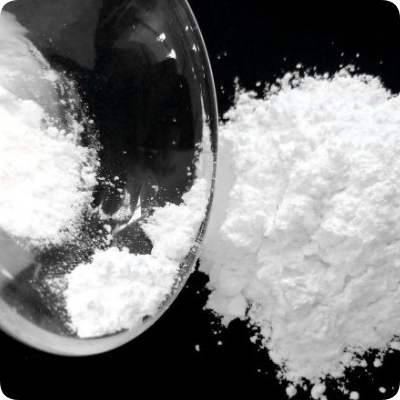
With a purity of ≥99% and no crystal water, anhydrous magnesium chloride powder has a fineness of 80–120 mesh, serving as the preferred flocculation raw material for high-end water treatment and fine chemical mother liquor recovery.
· Flocculation Advantages: Large contact area, instant and complete dissolution in water, fast release of magnesium ions and rapid formation of abundant flocs; ultra-low impurity content, applicable to seawater desalination, food processing wastewater treatment and precision chemical wastewater disposal; the required dosage is 20% lower than flaky magnesium chloride for the same water treatment capacity.
· Applicable Scenarios: High-salinity wastewater, seawater pretreatment, flocculation recovery of fine chemical mother liquor, auxiliary purification of high-standard drinking water, advanced heavy metal removal.
· Drawbacks: Prone to moisture absorption and caking, requiring airtight storage; dust generation during manual feeding, so closed chemical dissolving equipment is necessary for large-scale automatic sewage plants.
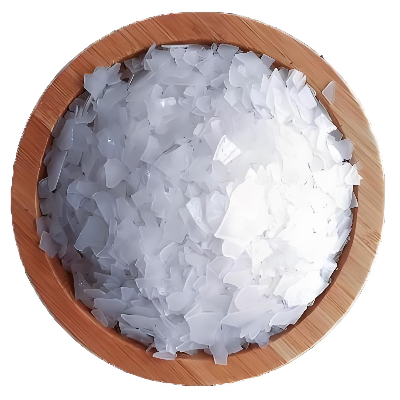
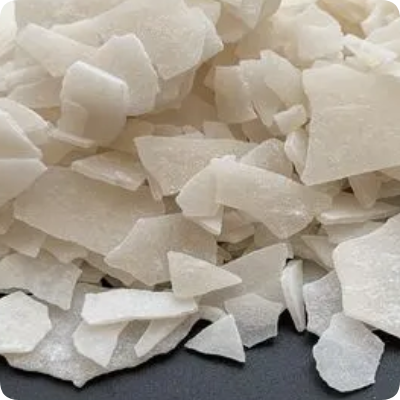
Commercially available flaky magnesium chloride mainly refers to hexahydrate magnesium chloride with an effective magnesium chloride content of around 46%. Featuring flaky crystal structure, good fluidity and low caking tendency, it is a universal flocculant for municipal sewage, coal washing wastewater and printing & dyeing wastewater.
·Flocculation Advantages: Moderate dissolution rate with little dust, compatible with both manual and mechanical feeding; stable storage performance and resistant to deliquescence under simple open-air stacking; lower unit price, ideal for large-flow and cost-controlled sewage treatment projects.
· Applicable Scenarios: Urban domestic sewage, aquaculture wastewater, coal washing plant clarification, brine purification for salt production, water treatment matched with road dust suppression.
·Drawbacks: Containing crystal water, its effective magnesium ion content is lower than anhydrous magnesium chloride powder; higher dosage is required for wastewater with high concentrations of heavy metals and phosphorus.
·Choose anhydrous magnesium chloride powder for high efficiency, low dosage and high-standard effluent requirements;
·Choose flaky magnesium chloride for large water volume, cost control and simple storage & feeding.
Both products shall be purchased from formal magnesium chloride factories to strictly control impurities such as calcium and sulfate radicals and avoid interference with flocculation performance.
1. Phosphorus Removal & Flocculation for Municipal Sewage and Aquaculture Wastewater
Magnesium chloride flocculation precipitates phosphate simultaneously to solve the problem of excessive total phosphorus in aquaculture tail water, ensuring effluent meets phosphorus discharge standards. The generated sludge is easy to dehydrate without aluminum residue pollution to water bodies.
2. Seawater Desalination and Brine Purification & Clarification
Seawater and salt field brine contain massive suspended silt and algae. Dosing magnesium chloride generates magnesium hydroxide flocs to quickly filter impurities and improve the purity of sea salt and desalinated water.
3. Decolorization & Flocculation for Printing, Dyeing and Chemical Colored Wastewater
Magnesium-based flocs can adsorb water-soluble dyes and organic pigments with high decolorization efficiency. Combined with alkaline agents, they can remove heavy metal pollutants simultaneously.
4. Clarification of Coal Washing and Mine Ore Dressing Wastewater
Mass dosing of flaky magnesium chloride rapidly settles coal dust and mineral suspended solids, enabling recycled water circulation and reducing water resource consumption.
5. Auxiliary Clarification for Food Processing
Food-grade hexahydrate magnesium chloride flakes are adopted for flocculation of wastewater from bean product and starch processing, safe and free of toxic residues.
The above introduction to the flocculation effects of magnesium chloride is provided by Yuze Magnesium Chloride Factory, a professional manufacturer supplying anhydrous magnesium chloride powder and flaky magnesium chloride. Feel free to contact us if you have any relevant inquiries, and we will keep updating content about magnesium chloride products.
Previous: High-purity magnesium chloride for printing and dyeing industry
Next: How to Identify the Quality of Anhydrous Magnesium Chloride Powder