E-mail:
tina@yuzechemical.com
Contact: Tina Pan
Email: tina@yuzechemical.com
Wechat: +8618660611992
Whatsapp: +8618660611992
Address: Xinxing Village, Dajiawa Street, Binhai Economic Development Zone,Weifang City ,Shandong Province,China.
Website: www.wfyuzehg.com
In the printing and dyeing industry, magnesium chloride is applied in two major scenarios: pretreatment & color-fixing auxiliaries for dyeing and finishing, as well as flocculation and decolorization of printing and dyeing wastewater. There are stringent restrictions on magnesium chloride in terms of appearance, purity, various impurities, solubility and stability. Ordinary magnesium chloride flakes and brine flakes are generally unsuitable for fabric dyeing procedures and subsequent wastewater treatment.
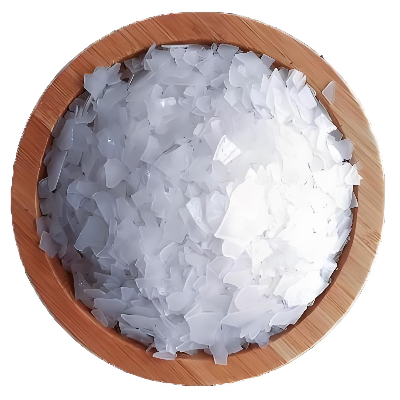
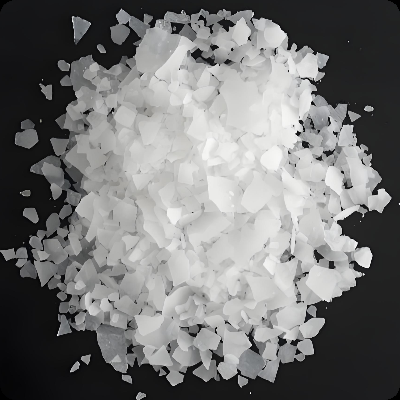
1. High-purity magnesium chloride (pure white or colorless transparent flakes) produced via pure acid process and chemical synthesis must be adopted. Yellowish, gray, brown or rust-colored mixed flakes are prohibited. Ordinary magnesium chloride contains high levels of impurities and forms yellowish-brown colloids after dissolution, which directly cause fabric stains, uneven coloring and gray base shades. Permanent yellow spots and defective products will occur on light-colored fabrics and white printed cloth.
2. Uniform crystals without caking, sediment or black mechanical impurities. Caked products dissolve unevenly, leading to fluctuating concentrations in dye vats and inconsistent color depth on fabrics.
3. Its aqueous solution shall be clear and transparent, free of turbidity and suspended precipitates.
The effective content of magnesium chloride hexahydrate (MgCl₂) shall be no less than 46.0%, with high-purity grades ranging from 46.5% to 48% preferred; the total purity of hexahydrate shall reach at least 98%.
· Insufficient effective content indicates high impurity content, which reduces the efficiency of dye acceleration and color fixing. Higher dosing dosage is required, increasing the salinity of printing and dyeing wastewater.
· Stable purity with minor batch-to-batch content fluctuations ensures consistent dyeing process parameters and avoids batch color difference.
1. Ferric and ferrous ions (Fe³⁺/Fe²⁺): Top priority for strict control
Iron content shall be as low as possible, with a limit of ≤0.005%.
Iron ions are the primary harmful impurities in printing and dyeing:
· They complex with reactive dyes and vat dyes to distort color shades, making red fabrics dull, blue fabrics gray and white fabrics yellowish.
· Long-term use in high-temperature dye vats generates rust precipitates that block padding rollers and printing screens.
2. Sulfate ions (SO₄²⁻) ≤0.5% (the limit for general industrial grade is relaxed to 1%, while stricter standards apply to printing and dyeing)
Sulfate ions react with calcium and magnesium ions in dyes and auxiliaries to form white flocculent calcium sulfate precipitates:
· The precipitates attach to fabrics to form white spots and clog printing screens.
· They accumulate in dye vat pipelines and heat exchangers, blocking equipment and reducing heat exchange efficiency.
3. Calcium ions (Ca²⁺) ≤0.15%
Calcium ions feature high water hardness, which easily generates limescale and color lakes, lowers dye solubility, results in uneven dye uptake and impairs fabric hand feel.
4. Water-insoluble matter ≤0.1% (the limit for general industrial grade is 0.2%, with stricter control for printing and dyeing)
Insoluble impurities suspend in dye liquor, block screens during printing and form granular defects on fabrics, greatly raising the reject rate.
5. Sodium salts (NaCl), total alkali metal chlorides ≤0.7%
Excessive sodium chloride alters the osmotic pressure of dye liquor, disrupts the color-fixing balance of reactive dyes, reduces color fastness and causes severe color bleeding during washing.
The above are partial requirements for magnesium chloride used in the printing and dyeing industry summarized by Yuze, a professional magnesium chloride manufacturer, based on our in-depth understanding of China’s printing and dyeing sector. Then what functions does high-purity magnesium chloride perform in this industry?
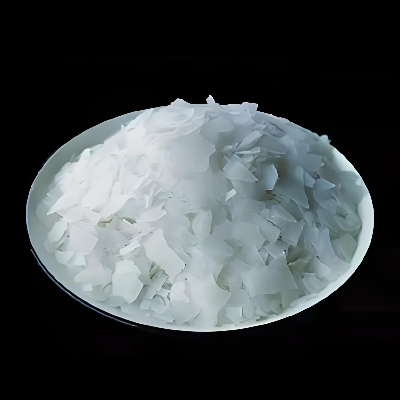
High-purity magnesium chloride hexahydrate flakes supplied by Yuze Magnesium Chloride Manufacturer have two core applications in printing and dyeing. First, it serves as dye accelerating and color-fixing auxiliary for dyeing and finishing, improving dye uptake rate and color fastness, stabilizing dye liquor shade and preventing uneven fabric coloring. Second, it is utilized for flocculation and decolorization of printing and dyeing wastewater, rapidly precipitating suspended dye particles, lowering wastewater chroma and pollutant concentration, and simplifying sewage treatment processes.
Magnesium chloride for the printing and dyeing industry differs from general industrial raw materials. It has a complete set of special standards covering four dimensions: whiteness appearance, main content above 46%, strict control of five major impurities, and stable solubility. The core demand is high-purity white magnesium chloride hexahydrate flakes with low iron, low sulfate and no discoloration.