E-mail:
tina@yuzechemical.com
Contact: Tina Pan
Email: tina@yuzechemical.com
Wechat: +8618660611992
Whatsapp: +8618660611992
Address: Xinxing Village, Dajiawa Street, Binhai Economic Development Zone,Weifang City ,Shandong Province,China.
Website: www.wfyuzehg.com
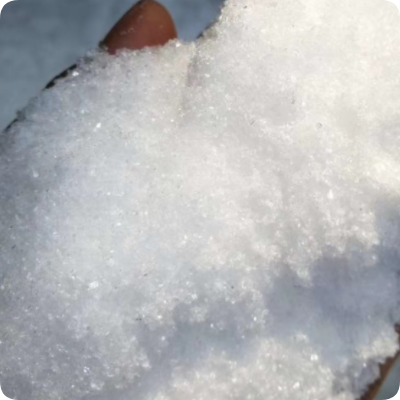
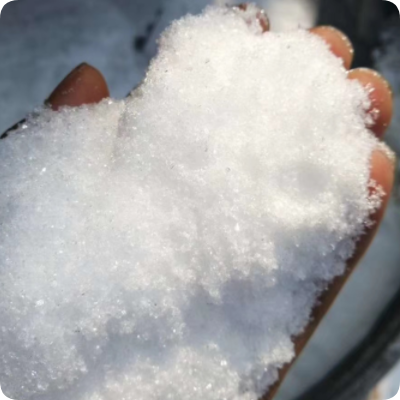
Nigari brine is natural mother liquor produced from seawater or salt lake salt making and it is a mixture. Magnesium chloride hexahydrate (MgCl₂·6H₂O) flakes are purified single chemical products processed by magnesium chloride manufacturers.
Nigari brine, also known as bittern, refers to the residual mother liquor after sodium chloride crystallizes out during crude salt or lake salt production. It is the traditional brine used for tofu curdling. It is a multi-component aqueous solution or crude solid product. Apart from magnesium chloride, it usually contains magnesium sulfate, potassium chloride, sodium chloride, calcium chloride and trace bromides. The proportion of each component changes with raw seawater, salt lake feedstock and evaporation processes. It has no fixed molecular formula and unstable composition.
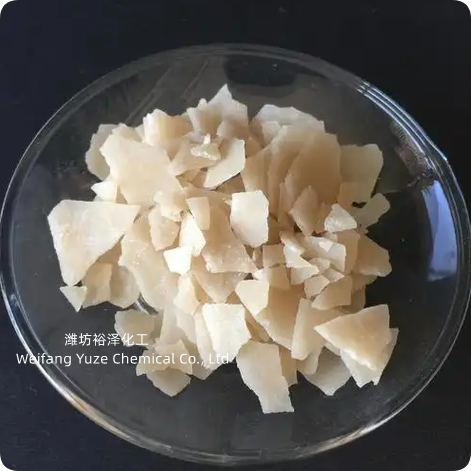
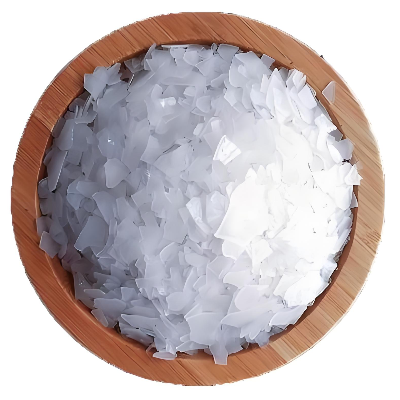
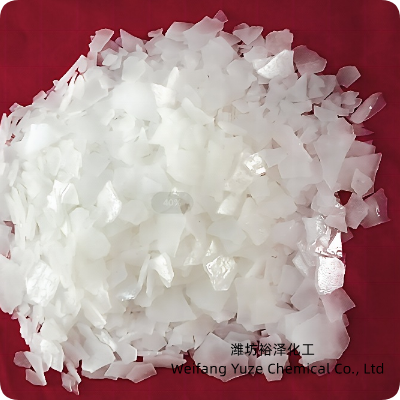
Magnesium chloride (MgCl₂) is a pure substance. Its mainstream commercial form is magnesium chloride hexahydrate, commonly called magnesium chloride flakes. In the early days, many magnesium chloride manufacturers used this kind of brine as raw material. After purification and crystallization, commercial magnesium chloride hexahydrate brine flakes are manufactured.
Comparison Item | Nigari Brine (Bittern) | Magnesium Chloride Hexahydrate (Magnesium Chloride Flake|brine flakes) |
Definition | Natural concentrated mother liquor, a by-product of salt production (mixture); the Japanese word nigari originally means "bitter substance" | Standardized chemical product, molecular formula MgCl₂·6H₂O, CAS: 7791-18-6, flagship product of magnesium chloride manufacturers |
Composition | Main component: magnesium chloride; accompanying substances: sodium chloride, potassium chloride, magnesium sulfate, calcium salts, bromides and natural trace minerals. Unstable composition with obvious batch-to-batch variation | Mainly MgCl₂ with adjustable purity. White flakes (industrial, feed, food grade) reach ≥46% purity. Impurities such as sodium, sulfate and heavy metals are strictly controlled for stable specifications |
Source | Residual brine after sodium chloride crystallization from solar evaporation of seawater or salt lake water | Two production routes: ① purification & crystallization from bittern; ② acid synthesis |
Form | Mostly liquid brine; also available as brine blocks and crude nigari flakes | Solid form mainly: white or light yellow flakes, granules and powder |
Advantages | Low purchase cost; traditional Japanese tofu coagulant with natural mineral flavour. Many buyers prefer the "natural nigari" concept | Stable composition, COA available, low impurities. Accurate dosage calculation. Suitable for standardized agriculture, aquaculture, de-icing and feed additives. Low-impurity white flakes facilitate export compliance, the core product promoted by magnesium chloride manufacturers |
Disadvantages | Variable composition, inconsistent magnesium content per batch, hard to standardize fertilization dosage. Uncontrollable sulfate and sodium ions. Fluctuating heavy metal and bromide impurities bring risks for food and high-end agricultural applications | Higher price than crude bittern; no extra natural minerals |
Food Application | Nigari for traditional Japanese tofu, delivers unique rich bean flavour | Widely used food additive for industrial tofu production, stable curdling effect with consistent clean flavour |
Are they the same material?
No. Magnesium chloride is the active ingredient in bittern. Bittern can serve as raw material for magnesium chloride flakes, but bittern itself is a mixture of multiple salts.
Can they be swapped for tofu making (food additive use)?
They can be substituted by calculating the effective magnesium chloride content. Do not replace them at a 1:1 ratio. Magnesium chloride hexahydrate flakes(brine flakes) curdle faster and create stronger protein shrinkage, resulting in firmer tofu with slightly lower water retention. Magnesium sulfate and calcium salts inside bittern enable gentler coagulation and bring subtle differences in taste and texture. Such differences mostly come from concentration and operation instead of fundamental chemical propertiesFor aquaculture、livestock farming magnesium supplementation When supplementing magnesium for aquaculture、livestock farming, judge by elemental magnesium content and product grade. Crude bittern with undefined composition is not recommended. For stable magnesium correction, choose standardized magnesium chloride hexahydrate flakes supplied by reliable magnesium chloride manufacturers.
Magnesium chloride (brine flakes)for industrial use As a professional magnesium chloride manufacturer, Yuze can match suitable specifications of magnesium chloride hexahydrate flakes(brine flakes) according to your technical indicators and application scenarios.
Next: No Information