E-mail:
tina@yuzechemical.com
Contact: Tina Pan
Email: tina@yuzechemical.com
Wechat: +8618660611992
Whatsapp: +8618660611992
Address: Xinxing Village, Dajiawa Street, Binhai Economic Development Zone,Weifang City ,Shandong Province,China.
Website: www.wfyuzehg.com
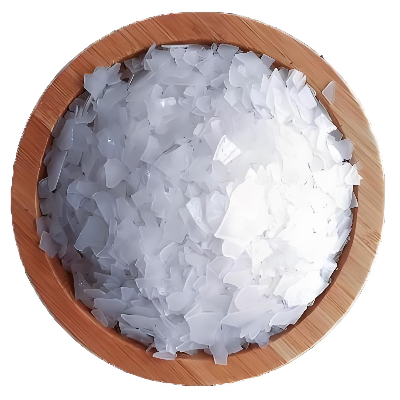
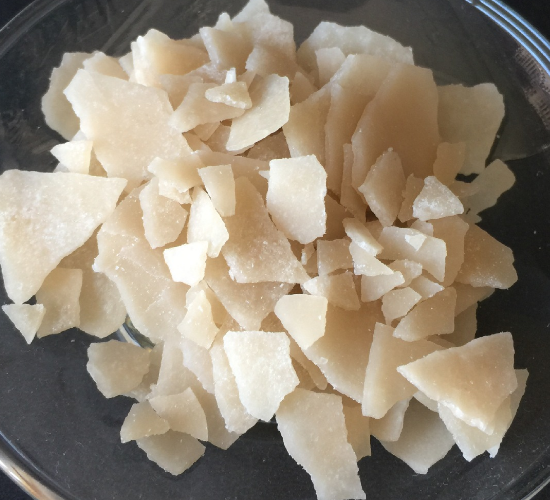
Brine flakes is the common name of magnesium chloride hexahydrate (MgCl₂•6H₂O), also named magnesium salt by many magnesium chloride manufacturers. It gets this name owing to its flaky shape produced by traditional production techniques. Conventionally, brine flakes are manufactured through seawater solar brine evaporation, extraction and crystallization, hence the name brine flakes.
From technical parameters, magnesium chloride serves as the principal component of brine flakes with a regular content of 46%, so it is also known as 46% magnesium chloride brine flakes. It contains impurities such as NaCl, KCl and MgSO₄, classifying it as a mixed salt and chloride salt product.
Advantages
1. Adopting a well-established traditional process, manufacturers can achieve mature production technology and stable product quality.
2. Raw materials are sourced from evaporated seawater brine with abundant reserves, supporting stable market pricing.
3. Superior solubility: freely soluble in water and ethanol. Its 20% aqueous solution has a pH value ranging from 6 to 8. Brine preparation is convenient and efficient, with dissolution test finished within 30 minutes.
4. Unique strengths in multiple application sectors:
o Food grade: Widely used for tofu coagulation in China. Tofu curdled with this brine features tender texture, delicious taste, good elasticity and rich soybean flavor. It delivers high protein coagulation rate and the finished tofu is resistant to breakage.
o Snow and ice melting: Fast ice thawing speed, low corrosion to vehicles and minimal damage to soil and plants. Its liquid formulation can be directly sprayed on road surfaces for anti-freezing treatment.
o Building materials: It reacts with caustic magnesia (MgO) to form magnesium oxychloride cement, whose finished products boast high strength, corrosion resistance and fire resistance, applicable for artificial marble, fireproof boards, magnesite manhole covers and other products.
o Sewage treatment: Used as a water purifier, it features simple dosing procedure, low dosage, easy degradation, no toxic residues and zero secondary pollution, showing prominent removal efficiency for SS, COD, total nitrogen and total phosphorus.
Disadvantages
1. Prone to caking and moisture absorption: It inherently has strong hygroscopicity, and this defect becomes extremely prominent for low-quality products.
2. Moderate corrosivity: In snow melting applications, the dosage must be strictly controlled. Excessive usage will cause corrosion to concrete structures and metal components.
· Food grade: White flakes with high purity and strictly controlled lead and arsenic impurities, specially used for tofu coagulation.
· Industrial grade: Standard flakes (purified flakes / regular flakes / salt flakes), magnesium chloride content: 45%–46%.
· Feed grade: Performance and purity sit between food grade and industrial grade.
· Available purity grades: 43%, 44%, 45%, 46%
· Color options: pure white, milky white, natural original color, brown, etc.
· Physical forms: flake, powder, pellet
Brine flakes = magnesium chloride hexahydrate (MgCl₂•6H₂O), with a bitter salty taste;
Edible salt = sodium chloride (NaCl), with a pure salty taste.
They are two entirely different substances and cannot be substituted for each other. Brine flakes must never be eaten as table salt.
Even food-grade magnesium chloride cannot replace edible salt, let alone industrial-grade variants. The ingredient list of household edible salt clearly contains no magnesium chloride. Accidental ingestion will trigger nausea, vomiting, abdominal pain and diarrhea. Ingestion of a large dose (2–10 grams) or industrial-grade brine flakes will lead to severe stomach pain, projectile vomiting, digestive tract burns and even gastrointestinal bleeding.
The above is the full introduction to magnesium chloride brine flakes provided by Yuze, a professional magnesium chloride manufacturer. Feel free to contact us for any inquiries about brine flakes and magnesium chloride products. Follow our updates, and we will continuously release technical documents about magnesium chloride hexahydrate and anhydrous magnesium chloride.
Previous: Magnesium Chloride for Aquaculture: Functions and Product Selection Guide
Next: What is magnesium chloride(hexahydrate & anhydrous magnesium chloride)?