E-mail:
tina@yuzechemical.com
Contact: Tina Pan
Email: tina@yuzechemical.com
Wechat: +8618660611992
Whatsapp: +8618660611992
Address: Xinxing Village, Dajiawa Street, Binhai Economic Development Zone,Weifang City ,Shandong Province,China.
Website: www.wfyuzehg.com
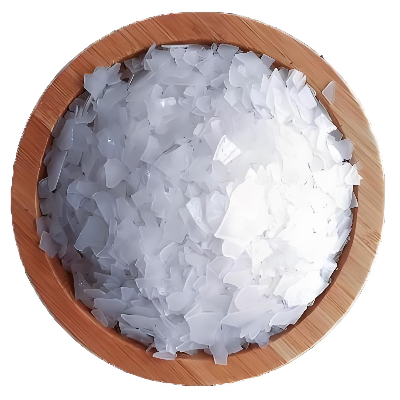
All three types discussed below refer to magnesium chloride hexahydrate, which accounts for over 99 % of magnesium chloride products available on the market. They are widely adopted across numerous industries and are mostly traded in the form of magnesium chloride flakes (brine flakes). As a professional magnesium chloride supplier, Yuze will elaborate on the advantages and disadvantages of these three grades ofmagnesium chloride hexahydrate to help you make well‑informed purchasing decisions.
Referred to as brine flakes among magnesium chloride supplier circles, brine‑source magnesium chloride is a traditional industrial grade of magnesium chloride flakes. It is produced by concentrating and cooling underground natural brine or residual mother liquor from salt‑making processes to precipitate magnesium chloride hexahydrate crystals. The product is mostly flaky, with magnesium chloride content ranging from 40 % to 47 %. It naturally contains minor associated salts such as magnesium sulfate and sodium chloride, representing brine flakes directly manufactured via conventional physical processes.
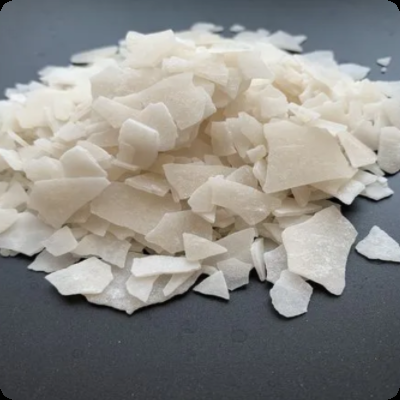
Advantages of brine flakes:
1. Simple production workflow without complex purification steps, leading to moderate production costs. It sits in the mid‑price range among the three types of magnesium chloride hexahydrate.
2. Good water solubility and fast dissolving speed. Food‑grade brine flakes deliver better texture and elasticity in finished food products.
3. A large number of manufacturers produce this material; surviving qualified magnesium chloride supplier maintain stable and reliable product quality.
4. Derived from underground natural brine or salt‑making mother liquor, it is a naturally‑sourced magnesium‑salt product.
By‑product magnesium chloride hexahydrate is reprocessed from waste streams generated during the manufacturing of other primary products. Typical sources include by‑products from potassium nitrate production and pharmaceutical intermediate synthesis.
Advantages: Manufactured from recycled industrial waste streams, it carries low production costs and is sold at a very competitive price. It is mainly used for applications with loose technical requirements.
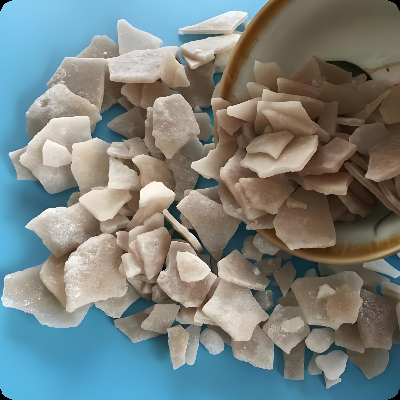
Disadvantages: Highly variable impurity profiles stemming from diverse feedstock sources. Residual organic compounds and heavy‑metal traces may be present, resulting in inconsistent quality. Caking frequently occurs in some batches.
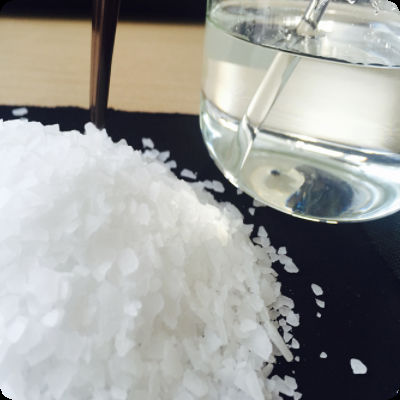
Chemically‑synthesized magnesium chloride hexahydrate is manufactured through artificial chemical reactions, predominantly via the acid‑process route. Hydrochloric acid reacts with magnesium oxide, magnesium hydroxide or magnesite ore, followed by purification and crystallization to yield magnesium chloride hexahydrate. Core reaction equations: Mg(OH)₂+2HCl → MgCl₂+2H₂O MgO+2HCl → MgCl₂+H₂O This is one of the flagship product lines from Yuze, your trusted magnesium chloride supplier.
Advantages:
1. High purity and low impurity levels: Acid‑process white flakes reach 46 %‑47 % magnesium chloride content. Heavy‑metal, sulfate and other impurity readings are far lower than those found in brine‑source and by‑product grades. The final aqueous solution remains clear, making it suitable for mid‑to‑high‑end precision manufacturing.
2. Consistent performance: Fast dissolution rate, strong anti‑caking property, and stable pH value between 6‑8. Excellent batch‑to‑batch consistency supports accurate dosing for continuous industrial production, outperforming naturally‑derived magnesium chloride materials.
3. Wide product portfolio: Custom grades with targeted water‑of‑crystallization contents are available. Specifications cover food‑grade and high‑purity industrial‑grade standards for export, high‑end building materials, electrolytic magnesium metal and other special‑purpose applications.
Disadvantages: High production costs. Reliance on industrial hydrochloric acid and high‑grade magnesium raw materials pushes up raw‑material and energy expenditure compared with brine‑source and by‑product grades, translating into higher market prices.
1. Purity and impurities: Chemically‑synthesized magnesium chloride hexahydrate features the highest purity with minimal impurities. Brine‑source magnesium chloride delivers moderate purity with low, stable impurities. By‑product magnesium chloride has relatively low purity together with complex impurities and prominent batch‑to‑batch fluctuations.
2. Cost & pricing: By‑product magnesium chloride has the lowest price for low‑demand general‑purpose applications. Brine‑source magnesium chloride offers the best overall cost‑performance for most industrial uses. Chemically‑synthesized magnesium chloride commands the highest cost for premium high‑purity scenarios.
3. Product stability: Chemically‑synthesized magnesium chloride > brine‑source magnesium chloride > by‑product magnesium chloride. Choose synthetic grades for high‑precision production; brine‑source magnesium chloride flakes (brine flakes)are preferred for regular large‑volume industrial operations.
4. Typical applications: ‑ By‑product magnesium chloride: general de‑icing, dust suppression, low‑grade auxiliary raw materials. ‑ Brine‑source magnesium chloride: mainstream industrial processing, export trade, infrastructure projects. ‑ Chemically‑synthesized magnesium chloride hexahydrate: high‑end fine chemicals, food processing, pharmaceutical manufacturing, precision production.
By‑product magnesium chloride, brine‑source magnesium chloride and chemically‑synthesized magnesium chloride hexahydrate each possess distinct merits. No single grade is universally superior; suitability depends on actual application requirements. Select by‑product magnesium chloride for low‑budget, non‑critical applications. For mainstream industrial use, cross‑border export and bulk orders, brine‑source magnesium chloride flakes (brine flakes) deliver optimal cost‑performance. For high‑end fine chemistry, precision production, food and pharmaceutical sectors, chemically‑synthesized magnesium chloride hexahydrate is mandatory.
As a professional and reliable magnesium chloride supplier, Yuze supplies premium acid‑process synthetic magnesium chloride hexahydrate and naturally‑processed magnesium chloride flakes (brine flakes) with consistent quality and transparent pricing. We recommend suitable magnesium chloride grades according to your operating conditions and technical indexes and deliver one‑stop procurement solutions.